It is generally accepted and published on various websites that an apprenticeship can take  between 2,000 and 12,000 hours to complete. The same websites mention that it will take between two and four years to complete an apprenticeship. It is also common knowledge that Bonsai cultivation apprenticeships can take many more years to complete than an apprenticeship for an electrician or a plumber. In my field of work, it takes four years to be trained as a teacher. This normally includes a three year degree programme as well as a one year professional Diploma in Education.
What do we get for all of this? You normally walk away with a piece of paper that announces that you are a qualified professional, a person that can do a good job to a good standard in your chosen area of studies. You also earn a salary. I have read somewhere that a Bonsai apprenticeship could involve 10,000 hours of work and study, mainly hands-on work under the supervision of a master. We usually find that apprentices in other fields of work also work under the supervision of a specialist or a master, at least a qualified person with ample experience. Let us break 10,000 hours down to get some perspective on the time factor.
I have found all over the internet that an apprentice should not work for more than 40 hours per week. We also anecdotally know that Bonsai apprentices work for much longer hours, especially those who complete their apprenticeships in Japan. Michael Hagedorn  has written about this in his book which discusses his experiences as an apprentice in Japan. If we take a normal working week as a 40 hour work week, 10,000 hours will equate to 250 weeks and if we work for 50 weeks per year, this equates to 5 years. This is hard, physical work and one wonders why it takes so much longer than other apprenticeships. The only thing that I can think of is that it is so much more than just the technical aspects of Horticulture that must be mastered. The artistic and cultural side of things probably takes a lot longer to master than the mere application of wire, watering, pruning, fertilizing and a whole host of other things that are needed to keep a tree alive.
I assume that it takes many years of cultivating Bonsai before one can be considered to be a Master Bonsai Practitioner. How many years? I have no idea. Must you go through an official apprenticeship to work towards Master status? Anecdotally, yes, but again, I do not know, but can guess that it is not necessary. In Japan these things are controlled by the Nippon Society and I can understand why. There is nothing like that in other areas of the World. Does an apprenticeship in Europe or the USA, under a practitioner who knows his business and has a proven track record, carry the same status as an apprenticeship done in Japan? A Bachelors or Masters degree from a well recognized university anywhere in the world do carry the same status. Most countries now have a Qualifications Authority which assess these things and recognize similar qualifications across the globe. Is it time that the same happens for Bonsai studies? In the mean time, where does this leave an enthusiast who just engages in his Bonsai as a hobby? Does it matter? No, I do not think so as these people (I am one of them with a little business on the side) cultivate Bonsai for reasons that have nothing to do with the commercialization of Bonsai. And that brings me to my summary.
Does the proliferation of Bonsai “courses”, both in residence as well as online, show us that Bonsai and the educational opportunities that do arise from the wider commercialization of Bonsai across the world is maturing into a world-wide commercial empire? If this is the case, then the management or control of what these courses look like, minimum requirements as well as qualifications achieved, will need a good look at and probably needs to be standardized. Out of these educational encounters, titles come to the fore. Who then is a Master, an Apprentice, a Technologist or a Hobbyist / Enthusiast?







 therefore important to be in touch with the sources of our inspiration. I have recently returned from a conference relating to Education where I was exposed to a variety of speakers. I was very aware that during and immediately after the conference, I was definitely more motivated to work on certain things in my main job. This came from listening to these powerful speakers and becoming aware of the latest trends in my vocation. This is the same for my Bonsai activities.
 Exposure to other Bonsai people will lead to higher levels of inspiration and motivation. I live in an area in New Zealand where there are not that many other Bonsai enthusiasts and you sometimes do feel isolated. To overcome this, I have to make an effort to meet up with other Bonsai people. The local club, although very small, serves as a source of inspiration. I am the teacher here and other people rely on me for the advancement of their skills and knowledge. This places me in a position where I have to stay on top of my game. Through this I have also realised that I only know about the tip of the iceberg and that I need to learn as well. Again it comes back to people, as I can only get this knowledge and skills from others who are more advanced than me, or have produced resources that I can learn from. So, first of all people.
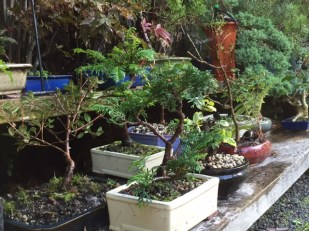 to learn or practice. I like the way that a lot of martial arts movements are set up. There is a clear line to follow from beginner level through to a very advanced level. I am not saying that we have to start different colour belts to show our proficiency in Bonsai, but the levels of training can be copied. A sensei at one dojo always learns from a more advanced practitioner somewhere else. This means you either have to go places or you have to get the masters to your place. This is already happening in Bonsai throughout the world and this has opened up many more opportunities for Bonsai professionals. As a side note, I do use the term Bonsai professional in a different context to Bonsai master. Not all professionals are masters and not all masters are professionals. More on this in later blogs. Back to the main thread of this blog. Where do we get inspiration from to excell in Bonsai activities? I have already established that it is mainly through the exposure to other people and preferably to more advanced practitioners. That means that you have to be a regular club member, be active in this club and teach at that level. The next step is to align yourself to an organisation or club where more advanced teaching takes place. From there it is important to attend shows, regional and national and even international teaching opportunities. Displaying your own trees is a big part of this. Immense growth takes place when you receive feedback from visiting judges once you get over the fact that you might get some negative input as well. Good teachers will make sure that this feedback is constructive and you can learn much from that. Just leave your ego at the door when you go into this type of situation, after-all, there is no ego in Bonsai as an art form.
 Other forms of inspiration comes from man made resources. I find a lot of inspiration in my very large Bonsai library (wonder what the total cost of this is), which consists of books and many magazines. I currently hold a subscription to two international magazines and also receive our national production on a regular basis. Books come through online bookshops and I am now also in the fortunate position that I receive books from publishers and authors to review. Magazines keep me up to date with what is happening in the Bonsai world and brings the latest shows into my living room.
 good quality channels and people who regularly post new material and from which I learn heaps. Just type Bonsai in the search area and you will find a great resources at your fingertips. While I am on internet based things, Facebook is exploding around Bonsai matters (probably lots of other things as well). One needs to be disciplined when you venture into this mosh pit of activity. Not everyone who has a presence here are noteworthy, but most of the “big” names in Bonsai are represented here.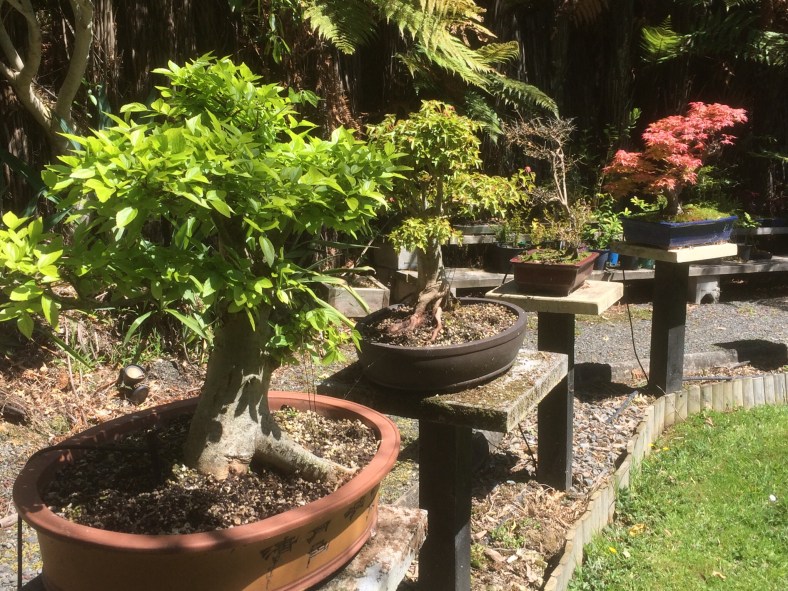

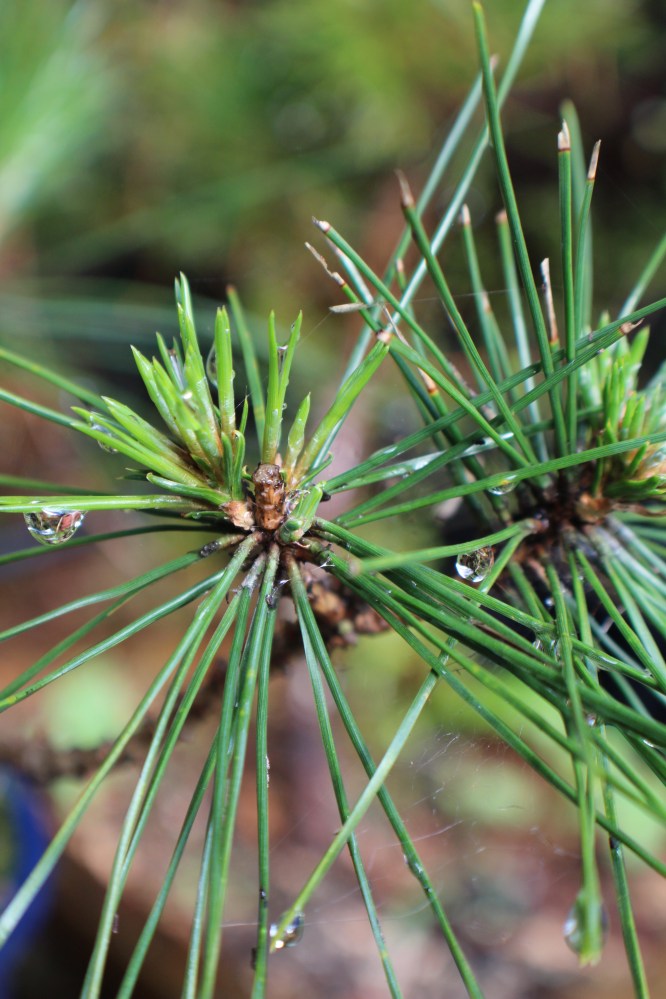







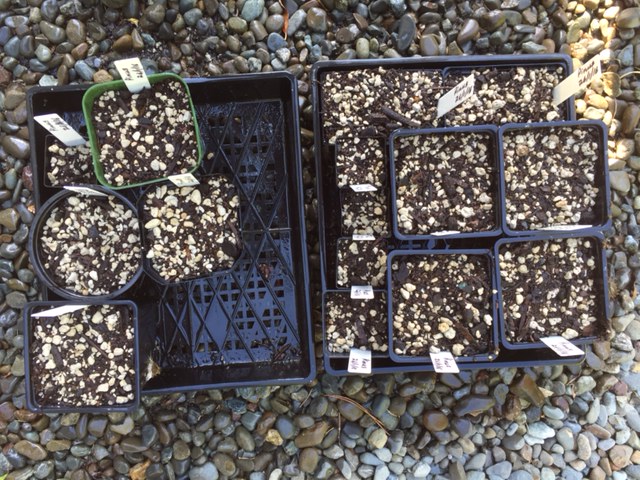
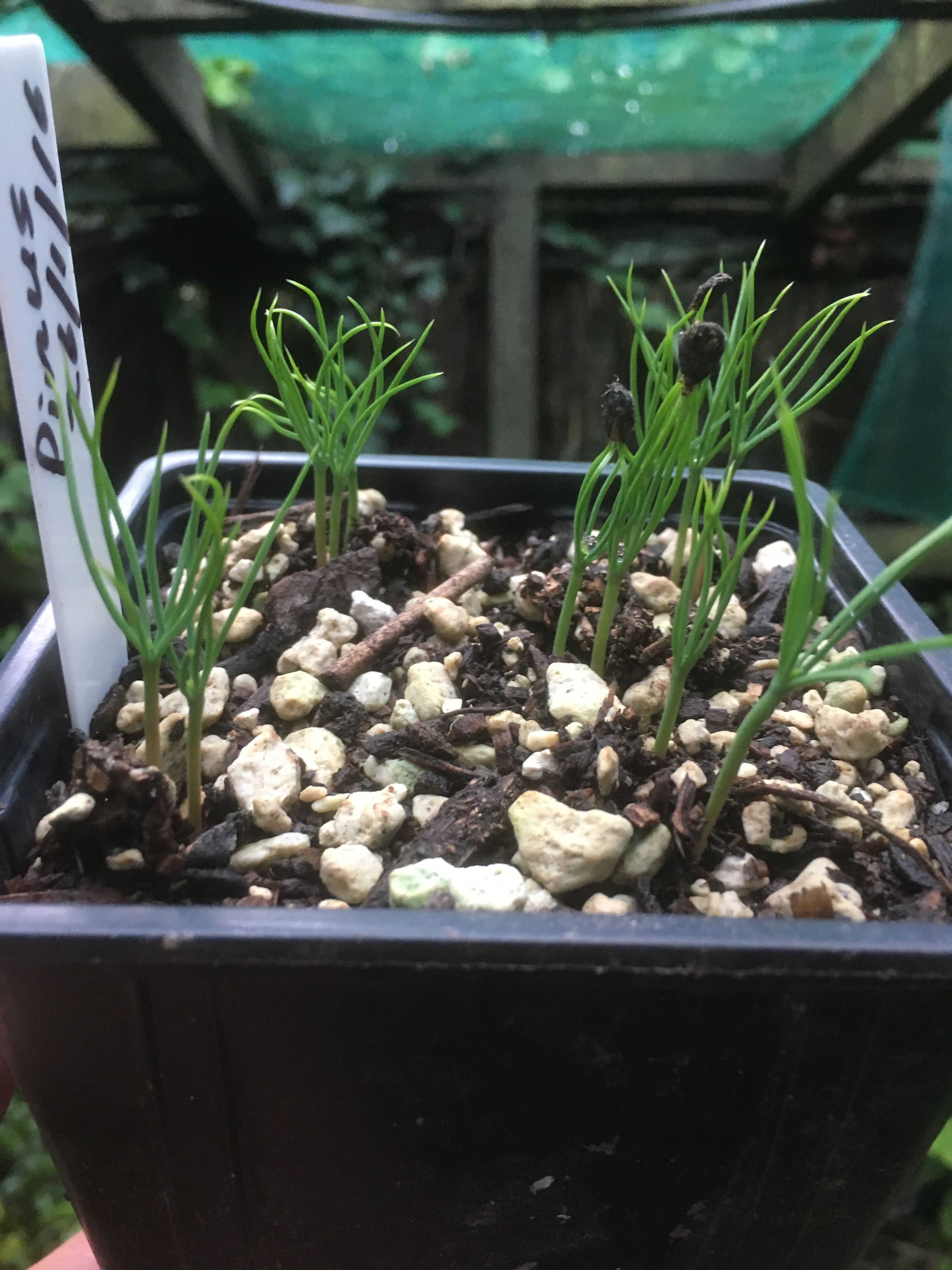

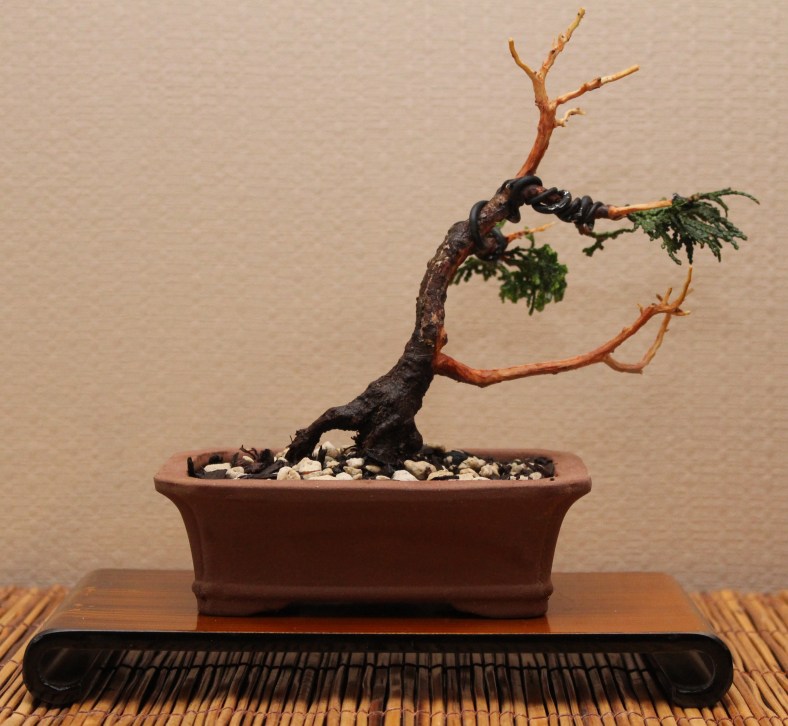
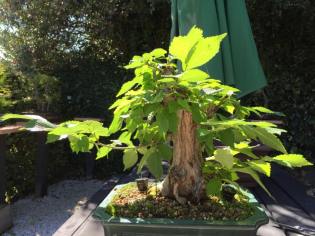 into something resembling a Shohin Bonsai. This tree was carved and repeatedly pruned until where it is today. A lot of time and work still lies ahead. One of the things that must be done now is to reduce the size of the leaves.
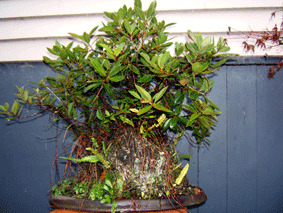
 Out comes the researcher in me and I start to do what researchers do. First step is to Google the term “defoliation”. An interesting phenomenon is that a lot of information is available on the defoliation of Cannabis plants. I have not tried to “Bonsai” one of those, but it makes sense that people who do grow these plants, do. I have also found information on the defoliation of other “forage” plants. This is done to stimulate the growth of more leaves as it is used to either feed animals or people or in the first mentioned case, smoke it (maybe it is for medicinal purposes). It is also mentioned that it stimulates overall growth of the plant.


























 en
en he stem puts

 , you are correct. Da Vinci never designed Bonsai, as a







 Bonsaiplace