
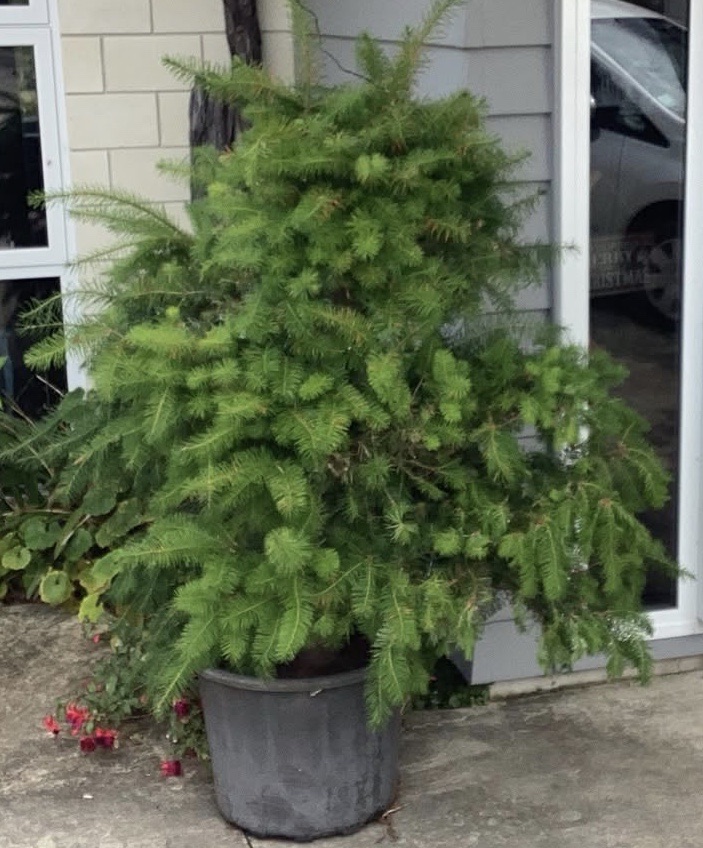
Douglas Fir (Pseudotsuga menziesii) is one of the most majestic trees of Western North America, capable of reaching over 100 meters in the wild. It has spread across most parts of the world. As bonsai, it offers rugged bark, soft needles, and a powerful mountain aesthetic. It is, however, one of the more challenging conifers to cultivate, needing precise watering, careful root management, and thoughtful seasonal timing. Below are my observations and what I have learnt over the last few years managing two quite different Douglas Fir trees.
Introduction
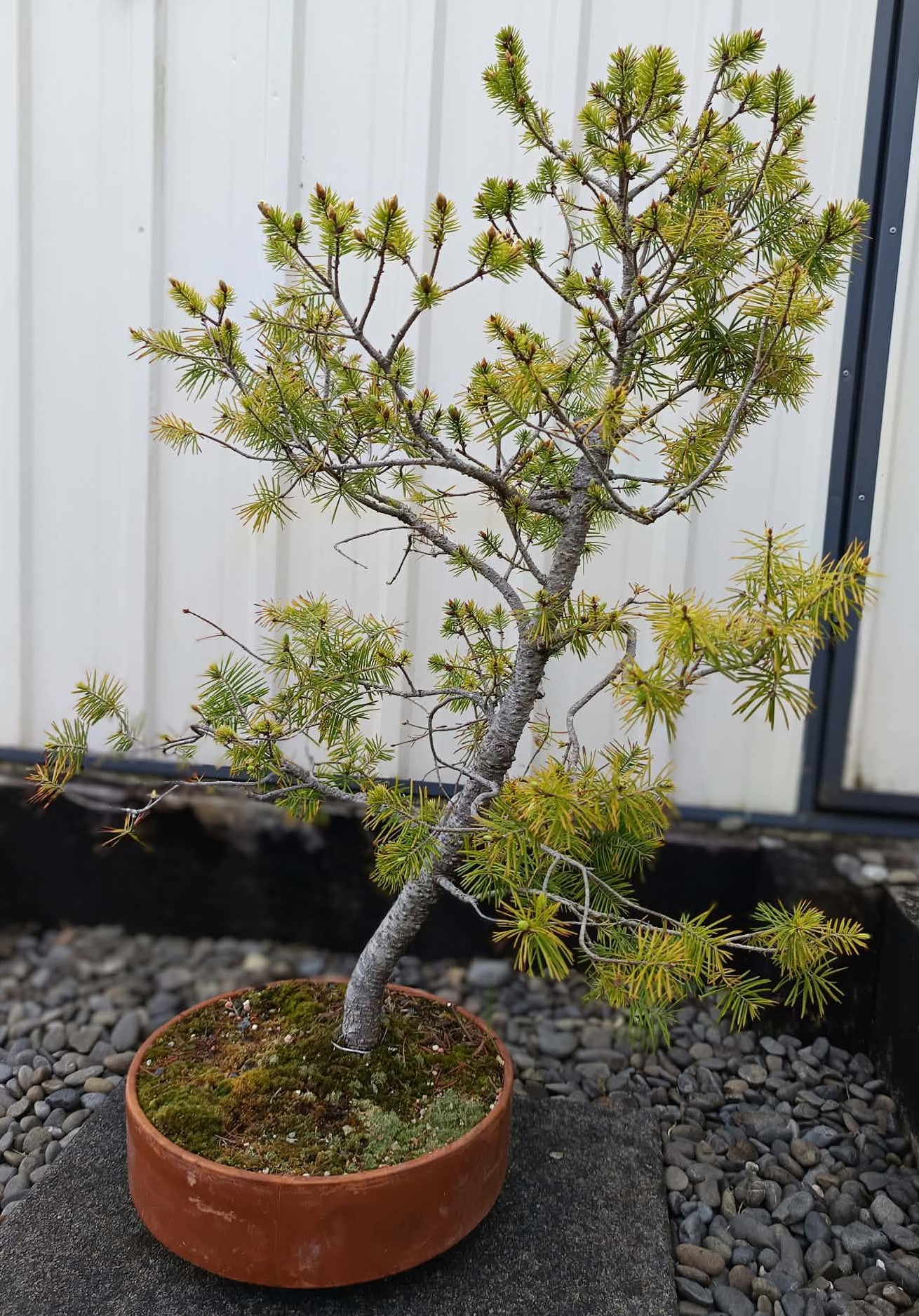
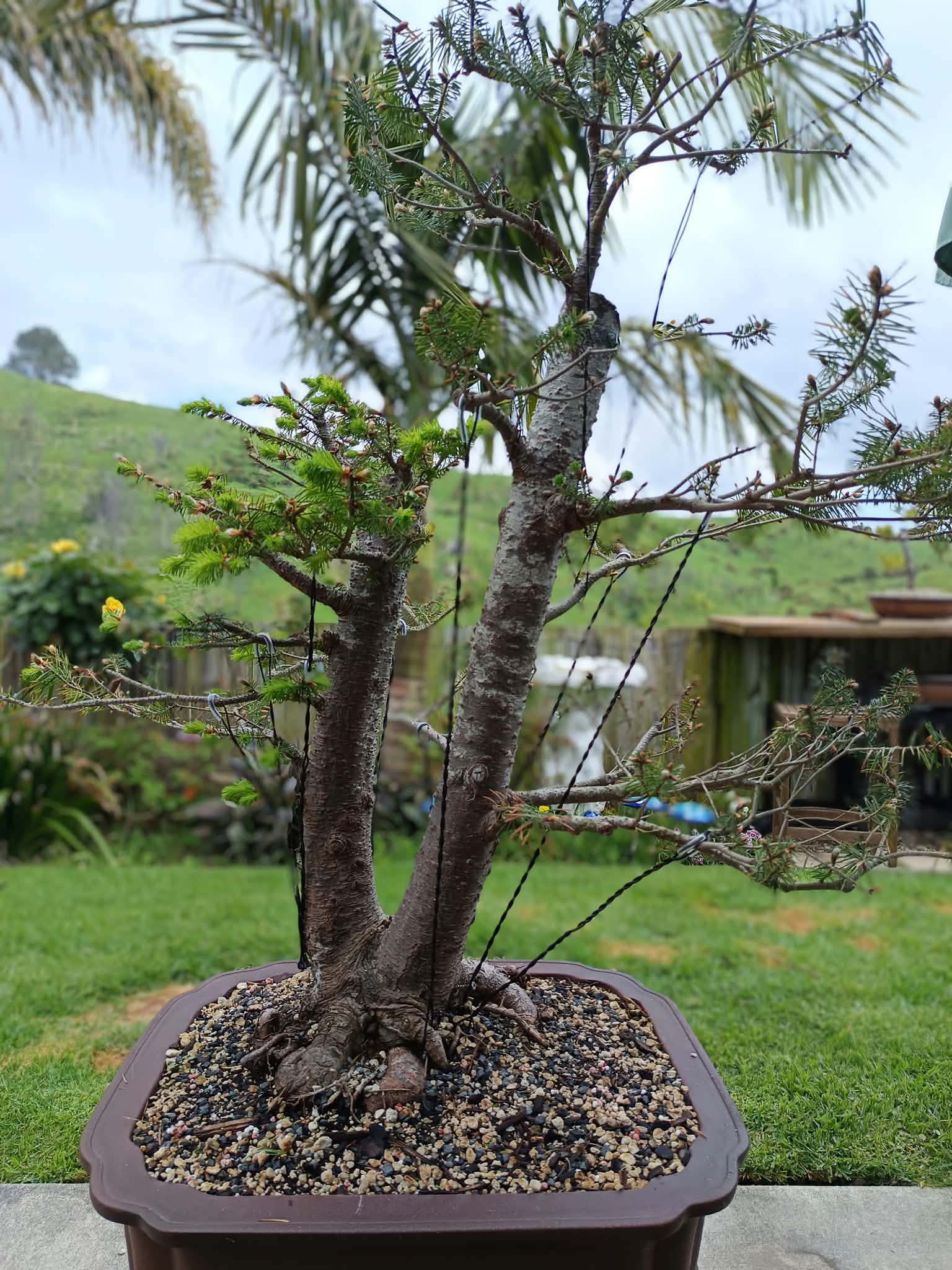
Douglas Fir bonsai are admired for their soft, radially arranged needles, fragrant foliage (rub or cut it), and bark texture that develops with age. When styled well, the feeling of high‑altitude forests and weather‑beaten cliffs come to mind. In saying that, the two trees featured here did not come from a terrain as rugged as this. One was dug from the road side next to a forest and the larger one was sourced from a person who dug it from a garden. Their growth habits differ from pines and junipers, making them a unique addition to any collection.
Key Features That Make Douglas Fir Excellent Bonsai Material
- Soft, flexible needles arranged around the branch, giving a lush evergreen silhouette.
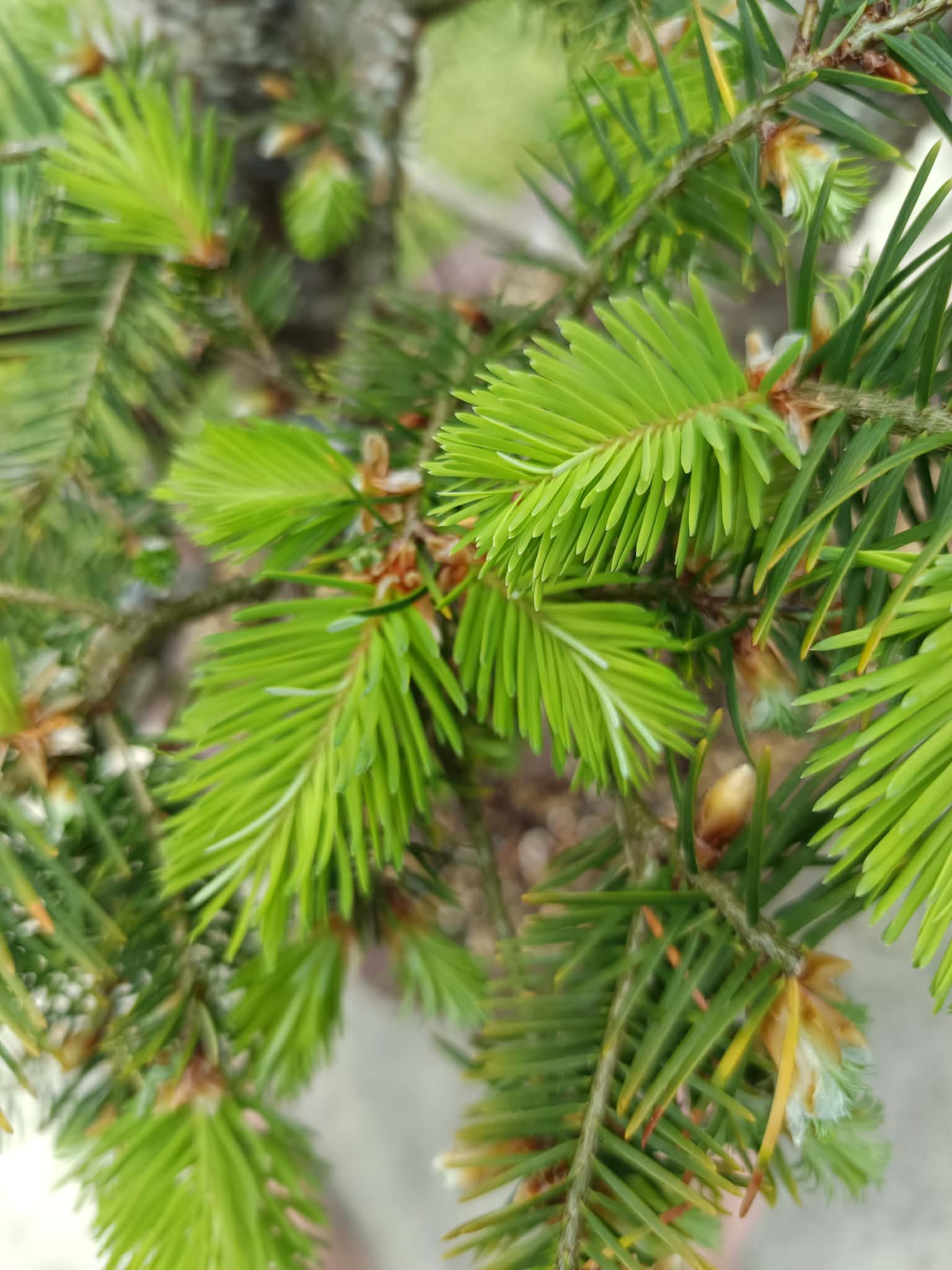
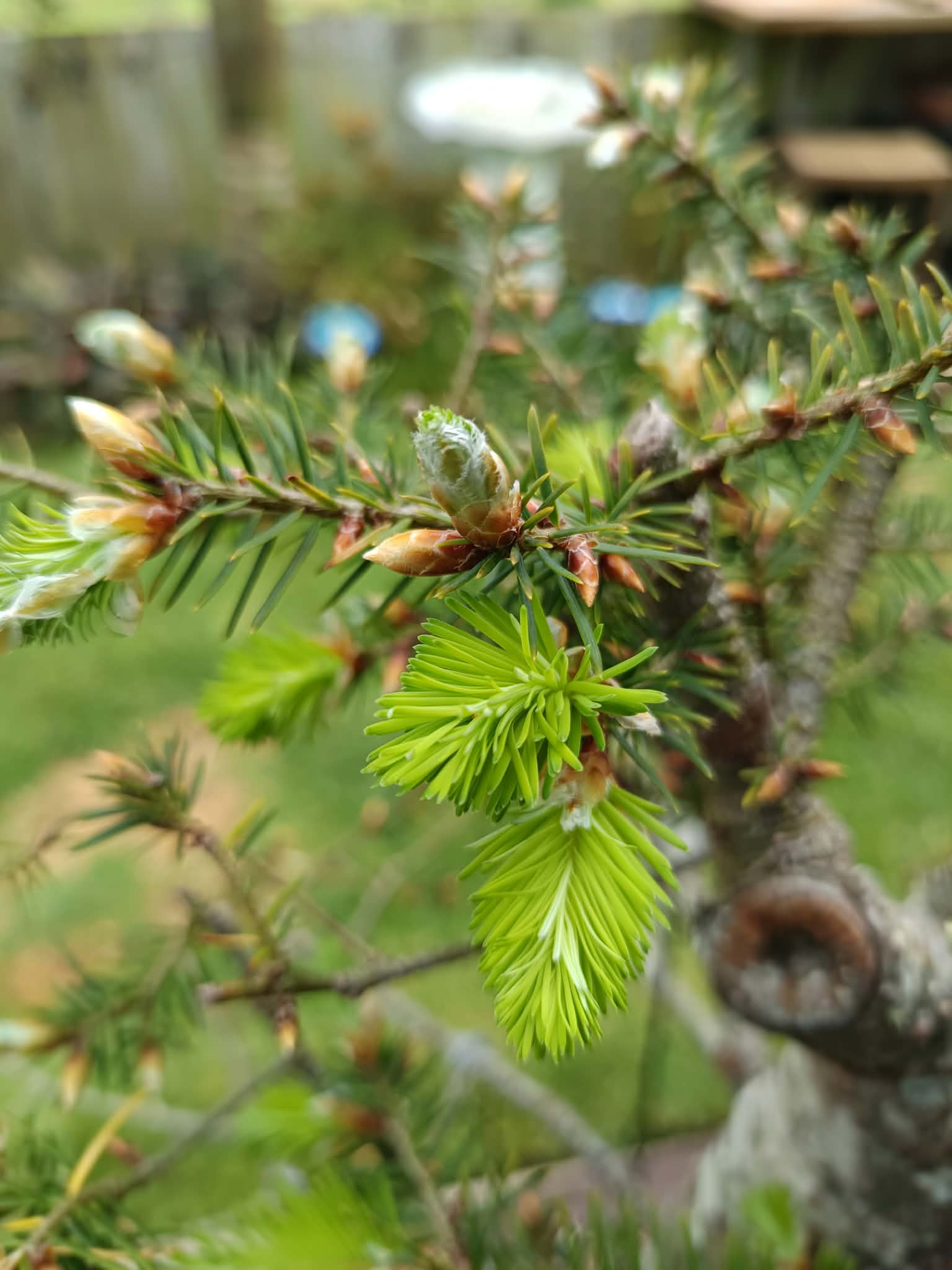
- Distinctive buds which are sharply pointed, with reddish‑brown terminal buds that add visual interest (see below).
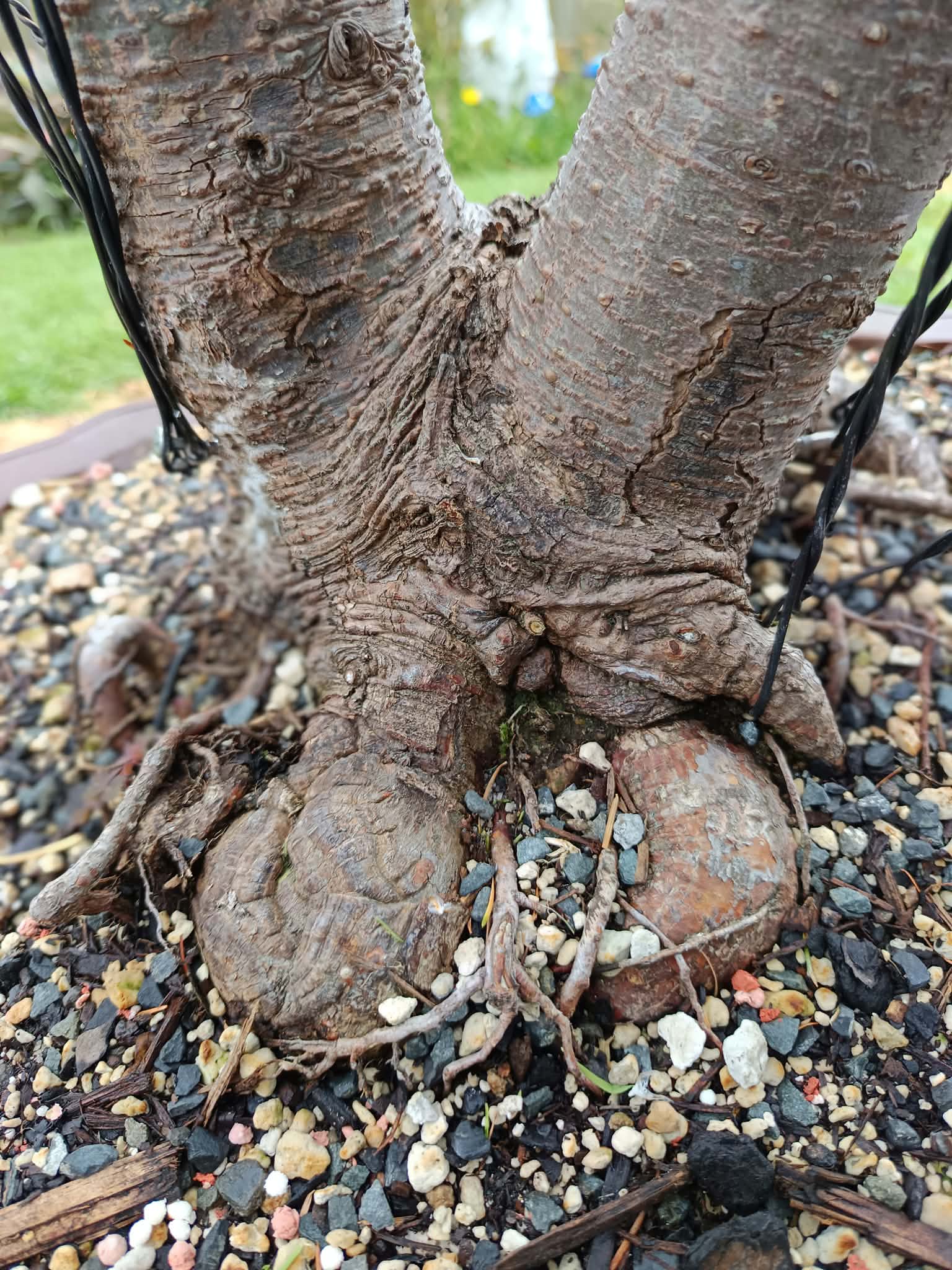
- Bark evolution: smooth grey bark with resin blisters when young; deeply fissured, corky bark as it ages—ideal for ancient tree aesthetics.
- Back‑budding does occur on younger wood, allowing refinement of branch structure.
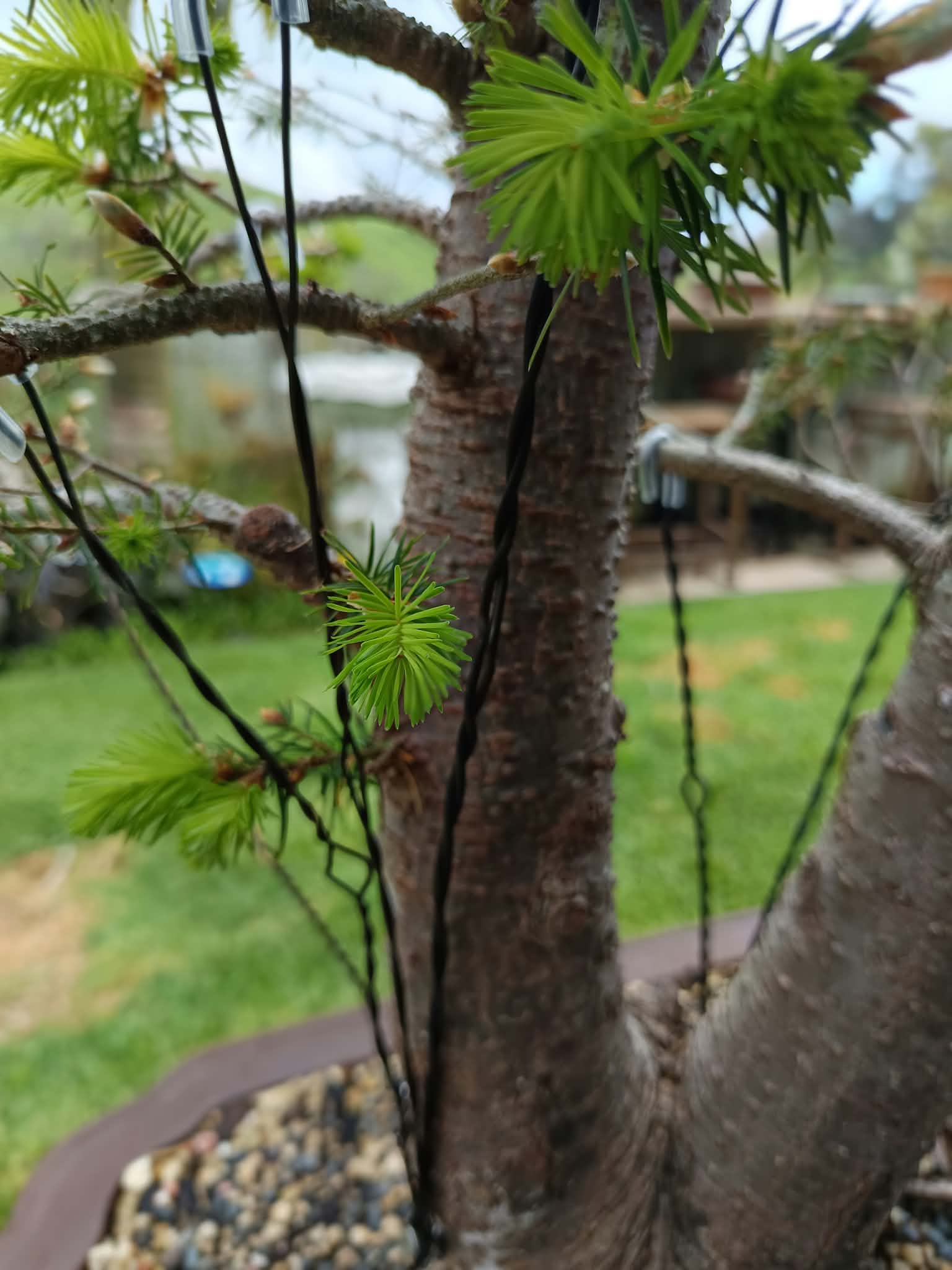
These traits make Douglas fir a strong candidate for formal upright, informal upright, and literati styles. One of mine is a twin trunk that is more upright with a slight slant, and the other smaller one is a slanting style tree (see above).
Watering Requirements
Douglas Fir is quite sensitive to water management.
- Even moisture is critical: If too wet the roots atrophy and die. If too dry, the foliage burns.
- Never allow the root ball to dry out, even briefly.
- Never leave the pot sitting in water either, they cannot tolerate being waterlogged.
- Full sun is preferred for healthy trees, but weak or freshly repotted trees need some shade in higher heat.
These trees demand constant attention to moisture balance, especially during summer.
Best Soil Mixture
Douglas Fir thrives in a well‑draining, slightly acidic conifer mix. I have noticed substantial mycorrhizal growth around the roots at the last repotting. This was preserved as much as possible and some of the old soil was placed back in the new pot to ensure the new soil is inoculated with the mycorrhiza.
Recommended blend:
- Pumice (for aeration)
- Lava rock (for drainage)
- Pine bark fines to mimic natural forest duff
My trees do not have Akadama or Kanuma (for moisture retention and acidity), but it could be a good addition for Douglas Fir. Key considerations: Preserve mycorrhizal fungi during repotting. This is critical for nutrient uptake and avoid overly water‑retentive mixes.
Fertilisation Protocol
- Moderate feeding throughout the growing season (spring and summer).
- Avoid heavy fertilisation; Douglas fir prefers steady, gentle nutrition.
- Stop feeding by early autumn to allow new growth to harden before winter.
Use: Organic pellets or a balanced liquid fertiliser diluted to ½ strength. Even NPK (6:6:6).
Key Stages of Development
| Early Spring (Primary Styling Window) | Spring–Early Summer | Midsummer | Autumn | Winter |
| Structural pruning. Wiring. Repotting only if necessary. Work before buds swell. | Allow new shoots to extend. Once hardened, shorten shoots back to buds for shape control. | Protect weak or freshly repotted trees from extreme heat. Maintain even moisture. | Stop pruning. Douglas fir should not be cut once autumn begins. Allow the tree to prepare for dormancy. | Full outdoor dormancy is essential. Minimal watering, but never let the soil dry out. |
When to Prune and Wire
- Major pruning & wiring: Early spring, before buds swell.
- Shoot pruning: After spring growth hardens; do not prune hardened wood back to a stub with no buds. This is the main task for the smaller tree this late spring to summer.
- Avoid wiring old branches hard. They are brittle. See guy wiring below in the photo.
- Stop all pruning by mid‑autumn.
- Carving can be an issue as the tree contains a lot of gum / resin and bleeds easily. Best done in winter. The large twin trunk tree will be carved during the next winter as branch selection and filling the foliage out are current priorities.
Pests & Diseases
Root Rot (Most Common Issue)
- Caused by overwatering or poor drainage.
- Prevention: well‑draining soil, careful watering.
- Management: reduce watering, improve aeration, treat with systemic fungicide.
Aphids & Spider Mites
- Common on conifers; look for needle discoloration or webbing.
- Management:
- Neem oil
- Horticultural soap
- Increase airflow
Heat Burn
- Soft spring growth burns easily in sudden heat.
- Provide temporary shade for weak or freshly repotted trees.
General Weakness from Root Disturbance
- Douglas Fir is extremely sensitive to root work.
- Repot only every 3–5 years, and never bare‑root.
Final Thoughts
In my opinion Douglas Fir bonsai are not beginner trees, but for patient practitioners, they offer unmatched character. Their rugged bark, soft needles, and powerful silhouette make them ideal for expressing the drama of mountain landscapes. With careful watering, gentle root management, and precise seasonal timing, you can cultivate a Douglas fir bonsai that feels truly ancient.

