Five Japanese Design Concepts
Dawid de Villiers (PhD)
I have recently seen a poster depicting five general Japanese Design Concepts (www.piktochart.com) and it started to make me think about how these concepts are utilised in the design of Bonsai. These concepts are Wabi-Sabi, Iki, Ma, Mono-No-Aware and Kaketsu.
Wabi-Sabi
This concept is the one that is quite often discussed in Bonsai literature. To find the exact meaning of this is quite difficult and as a non-Japanese speaker, I have to rely on definitions and descriptions from the literature. It is quite clear that there is a wide variety of interpretations of what it exactly means and the literature acknowledges this fact. A concise summary of a possible meaning is that it is a Japanese world view or aesthetic centered on the acceptance of transience and imperfection (en.m.wikipedia.org/wiki/Wabi-sabi). It is the art of finding beauty in imperfection and profundity in earthiness, of revering authenticity above all (www.utne.com). Susuma Nakamura (Neff, 2012) relates wabi to calmness and quietness and sabi to simplicity and oldness (age).
Morten Albek (shohin-europe.com) describes it best in relation to Bonsai. He summarises it as a concept embracing beauty, simplicity, silence, age and imperfectness. In my mind it is that quietness that embraces one when you look at a Bonsai and it brings a stillness and a peacefulness, and at the same time a restlessness due to imperfections that add to the overall beauty of the living artwork. This can be seen in a rustic pot, the naturalness of the tree, not all branches or roots being in the perfect spot, the power exuded by a tree due to its age. It gives a sense of balance between perfection and imperfection with a deep appreciation of nature and the art depicted in that tree. That balance could be observed as a perfectly formed branch and on the trunk a shari. Perfection vs imperfection that all adds up in a deeply satisfying experience of interaction with this tree. It is the calmness and quietness embraced when in the presence of a Bonsai tree showing simplicity and character.
Iki
According to the poster mentioned, it means original, calm, exquisite and sophisticated, but without being perfect or complicated. A rough translation means chic or stylish. This is a term not found in Bonsai literature as it probably is encapsulated in the Wabi Sabi concept. It could mean the design of a Bonsai should be original, in other words, to allow the tree to determine the design, not to copy other trees, but to allow the roots, trunk and branches to dictate the style and movement of the Bonsai. If naturalness is pursued, it should lead to an exquisite and sophisticated tree. This probably will only be seen in mature trees, but is a concept that must be kept in mind during the design phases, spreading across years to reach the ultimate phase where the exquisite nature can be experienced.
Ma
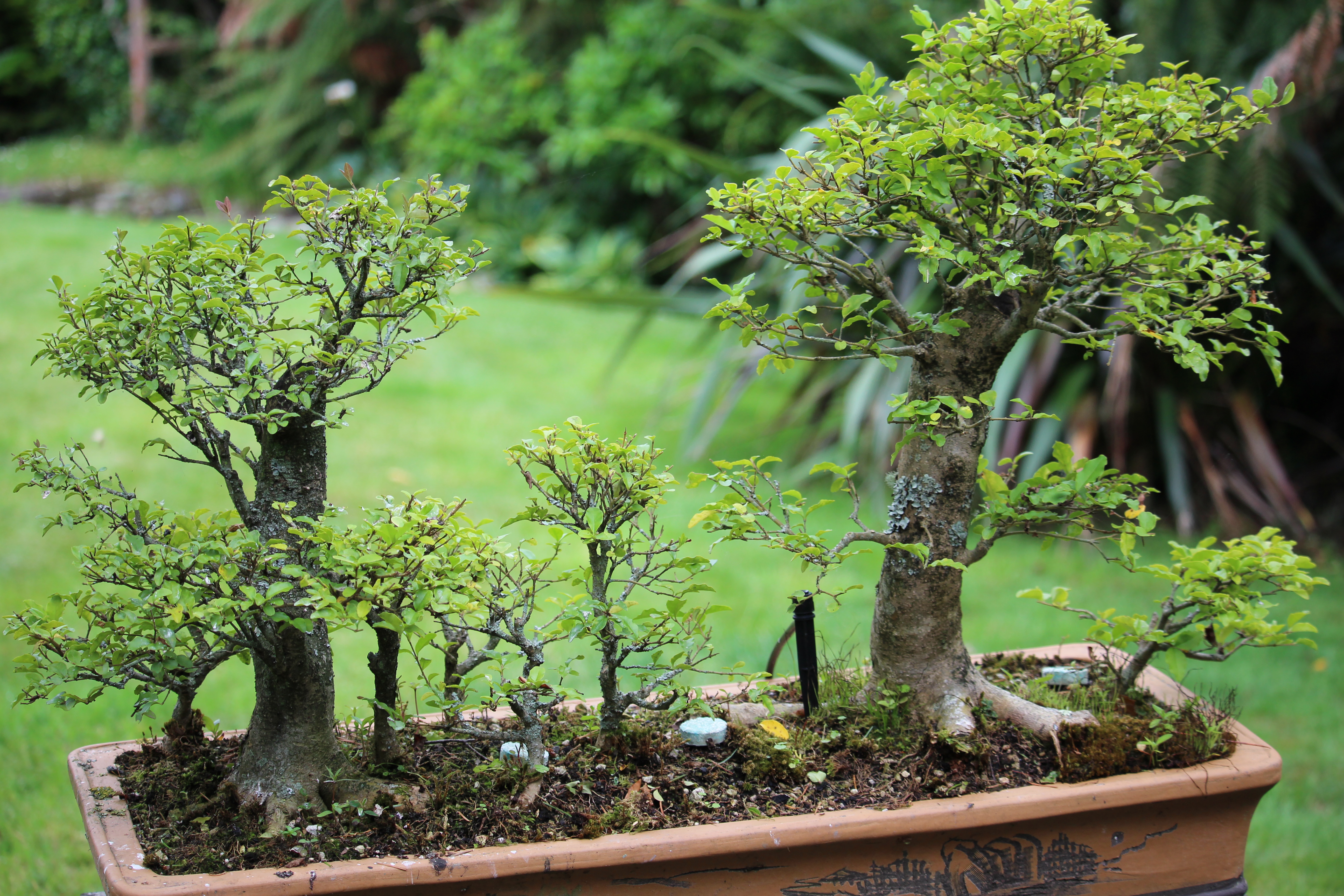
This concept refers to whitespace or emptiness. It defines the element around it and it in turn also is defined by the element surrounding it. The concept of holism comes to mind here. An empty space cannot be defined as such without something bordering it. The design element of empty spaces is a very important one in Bonsai design. The description of creating spaces that will allow a bird to fly through the tree, brings the example of especially Tui that can fly without effort through a tree, to mind. Emptiness or negative space defines the solid structures around it. It is part of the design. We are sometimes so fixated by getting a branch in the right place in relation to the trunk and other branches, that we forget that the branch is not only defined by these structures, but also its own shape in relation to the space around it. Foliage clouds can only be defined when there is open space around them. The size and placement of these spaces is as important as where the parts of the trees are placed.
Mono-No-Aware
This concept refers to the “pathos of things”. It means being aware of the passing of things and the bittersweet feeling that goes with it. This is very noticeable in Bonsai. A Bonsai tree starts somewhere, either from seed, a cutting or wild material. From here it is nurtured, neglected, designed, restyled, appreciated and it could die (hopefully outlasting its designer). It goes through phases, each with its own characteristics, much like a human being developing from birth to old age. As humans we have empathy and we can admire this development. The same happens with Bonsai. “Before and after” photos are popular and personally I think it is awesome to visit Bonsai gardens, displays and conventions to look at the development of individual trees over years.
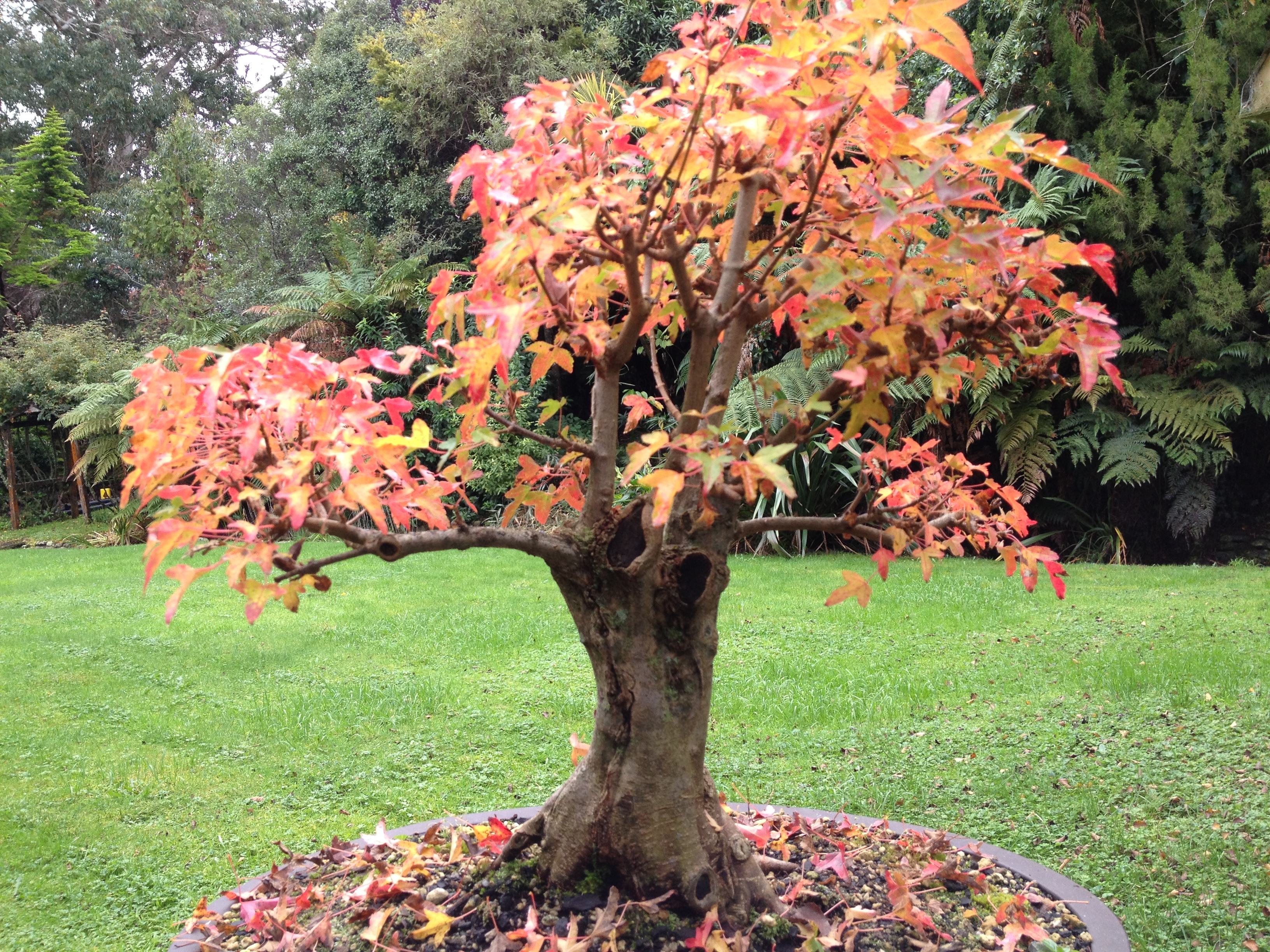
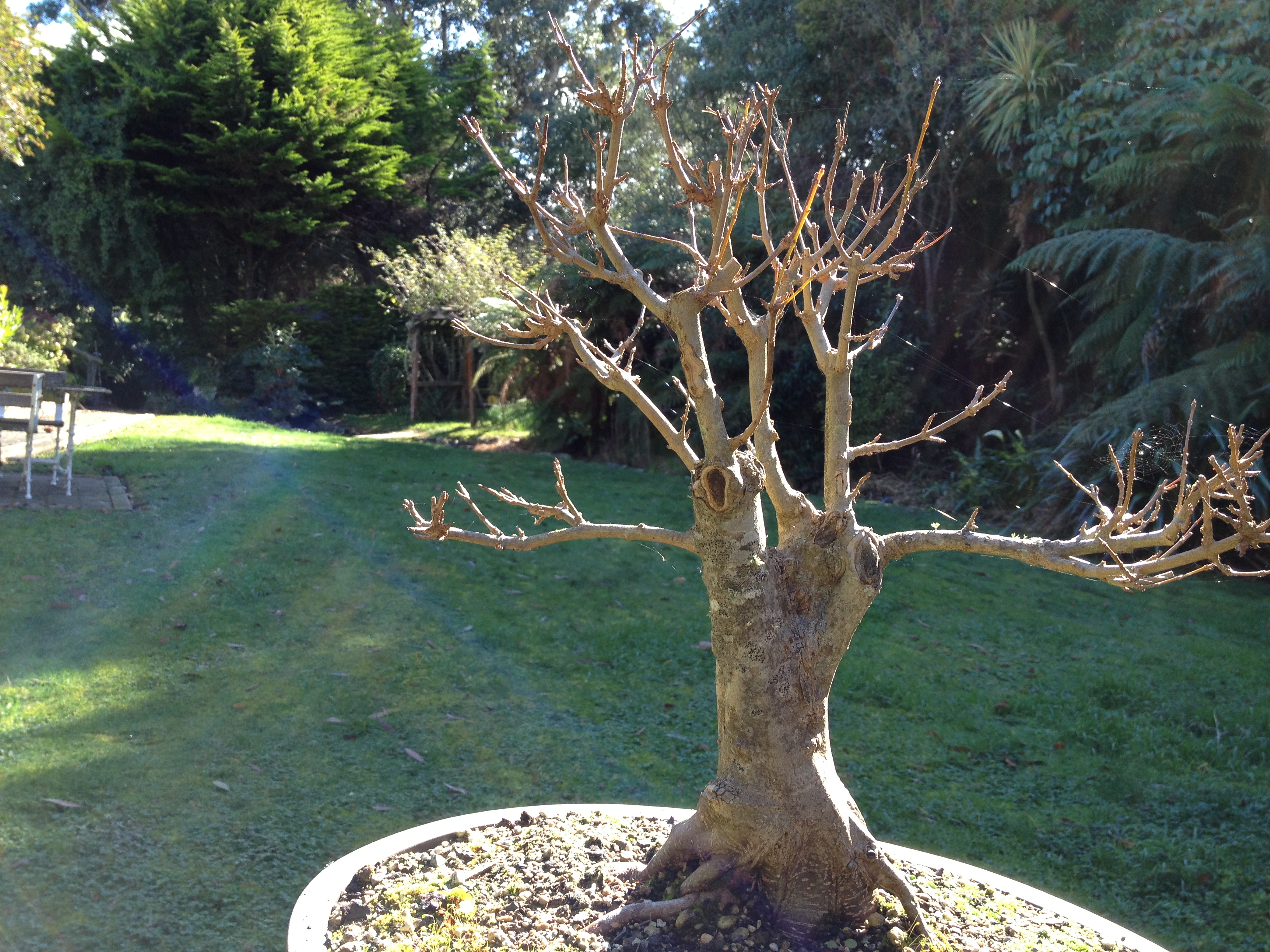
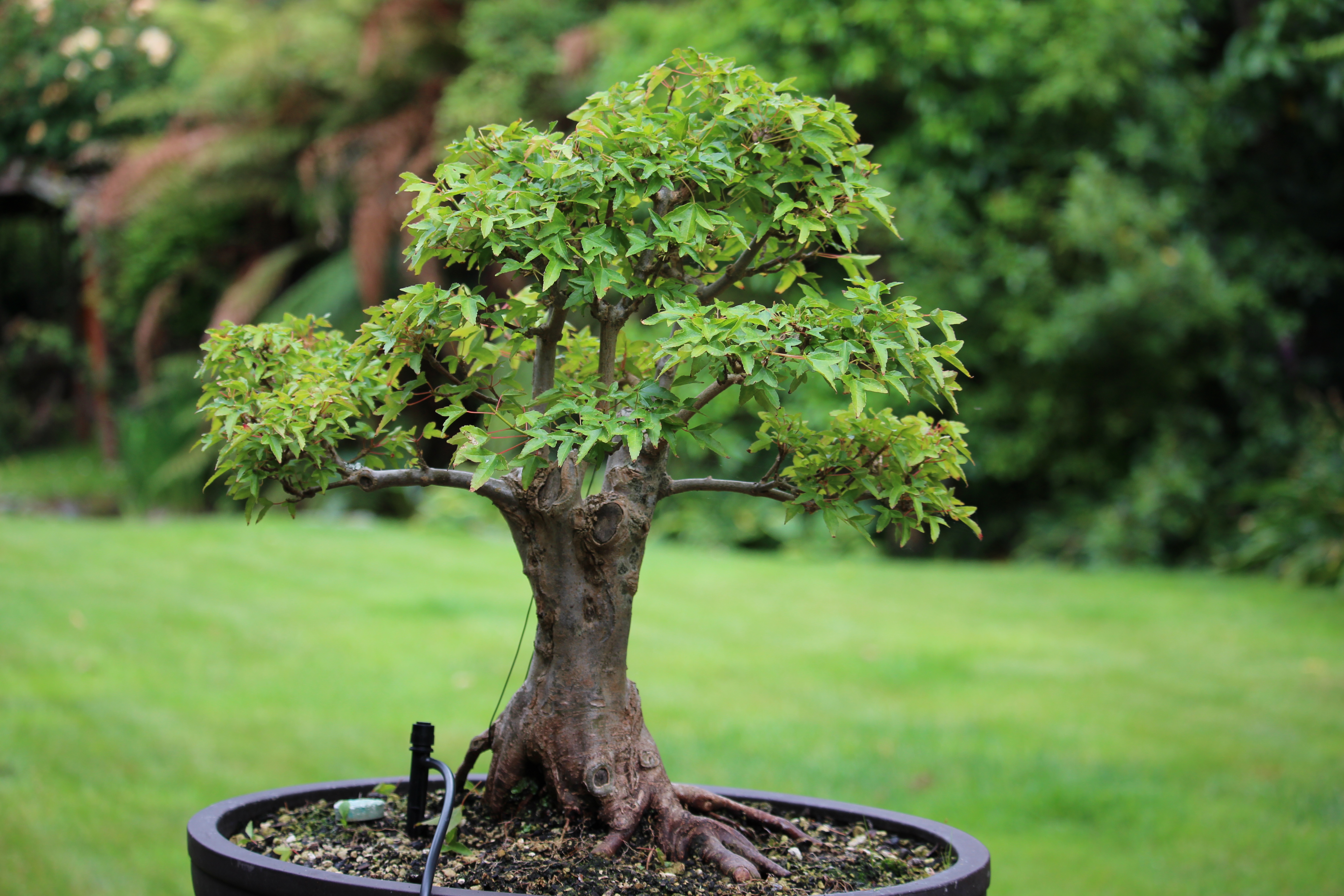
This concept also relates to the impermanence of things. The flowering phase that in some species only last for a few days, also seen in deciduous trees and the changes that go with that. From no leaves, to green leaves, to autumnal colours to no leaves again. These changes should be embraced and studied as they are forced by nature and hormones. It also gives us the science behind the horticultural management of our trees. Nature is never very far away from art.
Kanketsu
This concept stresses that true simplicity is often achieved through a complex process. The opposite of simplicity is complexity. This design concept therefore means that to create a “final” design of simplicity it is possible that complex processes could be used to achieve this ultimate goal. To achieve simplicity in Bonsai design, it is important to be as naturalistic as possible. The complexity in the process lies in decision-making. What to cut, what to shift, what to leave in place? The answers to these questions will ultimately determine the design and whether it is simplistic or complicated. A tree in nature is simplistic; roots, trunk, branches and leaves, all in place due to nature following a simple pattern. There are external influences (climate), but overall it is quite a simple design. The processes of getting it there is complex, photosynthesis to name but one. Overall this concept urges us to keep our designs simple, to look at nature for inspiration and to follow the mantra of “less is more”.
Conclusion
This article very briefly describes five Japanese design concepts. There are many more. The concept of Wabi Sabi is well known in Bonsai circles, but the others are not so much known in the western world. The concepts are not new, but it is good to know that they are actually known and acknowledged in wider design and artistic circles. As said, there are other concepts or qualities that can be applied to Bonsai. One of these, “ga”, meaning elegant and graceful, is proposed by Susumu Nakamura. He also says that such watchwords can sustain the caretaker as well as the tree (Neff, 2012).
The Stanford Encyclopedia of Philosophy describes Japanese Aesthetics. It is my recommendation that all Bonsai enthusiasts should read this work as it gives a deeper foundation of what Bonsai design should be based on. The link is http://plato.stanford.edu/entries/japanese-aesthetics/.
References
http://en.wikipedia.org/wiki/Wabi-sabi
http://www.utne.com/mind-and-body/wabi-sabi.aspx#axzz3Mf7pJ6lp
http://shohin-europe.com/ARTICLES-wabisabi.htm
http://plato.stanford.edu/entries/japanese-aesthetics/
http://www.piktochart.com
Neff. T.A.(ed) 2012. Bonsai, A Patient Art. The Bonsai Collection of the Chicago Botanic Garden. Yale University Press: New Haven.






 Bonsaiplace