Root development in Bonsai

Tree_roots_cross_section-e1351581137309-1024x451It pays to know something about the anatomy and physiology of roots when it comes to developing the root system of Bonsai trees. It is said that a tree mimics its above ground growth to what happens with root growth below ground level. This might be true for trees in nature, but with Bonsai it could be quite different due to the fact that we prune the roots and the roots also have to grow in a confined space.

When a root is studied under a microscope it is clear that there partsofrootsare different tissue types present in different areas of the root. On the outside is an epidermis layer consisting of cells. To increase the surface area, and therefore the absorptive area of the root, extensions of these epidermal cells grow into the soil. These are the root hairs. The main job of the root hairs is to absorb water and nutrients. They are very small and fragile and normally breaks off when a plant is pulled from the soil. This is a very good reason to be gentle when a plant is uprooted and when soil is removed from the roots.Root(cross_section)
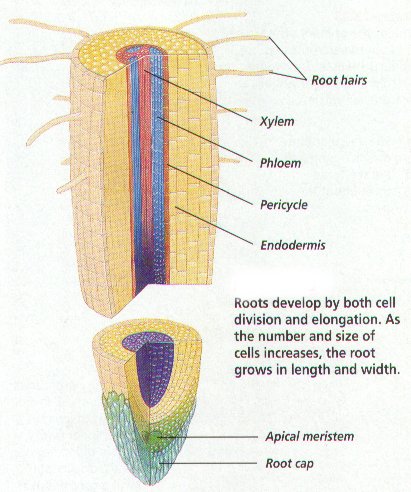
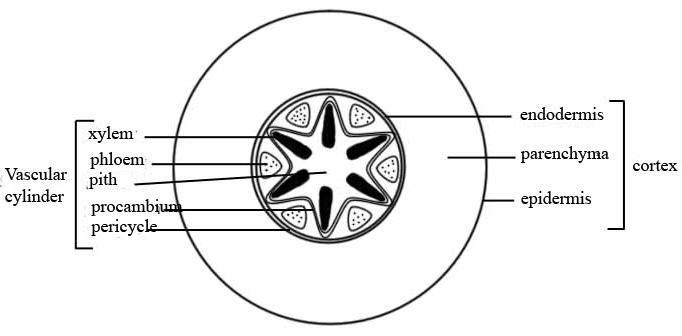
The next layer under the epidermis is the cortex. These cells are loosely spaced to allow for the movement of gasses and dissolved nutrients to the core of the root. The middle part (core or stele) of the root consists of the vascular tissues, the xylem and the phloem. The xylem particularly is of importance here as it is through this tissue that the water and nutrients are transported to the rest of the plant. Around the vascular tissue is another layer of cells, called the endodermis and underneath this is the pericycle.

OLYMPUS DIGITAL CAMERA

Lateral root growing from the pericycle.

This pericycle is of particular importance to the plant and Bonsai artists as this is where lateral roots originate from. The origin of the lateral roots is therefore situated deep inside the root structure and not like the branches or side shoots of the plant that originates from adventitious buds. The only reason for this that I can think of is that it provides better protection for the roots. It also means that the vascular tissue is in close contact with the lateral root.
repotting2

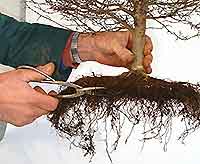
Apply rooting hormone to the cut roots.

If the root is studied externally the branching of roots can be seen as starting a little bit further back up the root and not right from the root tip. The same mechanism that applies to pruning above ground is also evident here. When the apical meristem (in the root tip) is removed, the pericycle is stimulated to grow more roots. This is also due to the influence or the lack of this influence, of plant hormones. This is the science  behind root pruning. When a root is pruned, more roots will grow from that area. It will help if rooting hormone is applied to the cut area as this will help to stimulate the pericycle to produce more roots. Ensure that the rooting hormone is applied evenly for an even spread of new roots. There is some evidence that when the rooting hormone is applied to only one side of a root, that more new roots will grow on that side. I will experiment with this and report back on findings.

OLYMPUS DIGITAL CAMERA

Air pruning.

The term air pruning has also been used in the propagation of plants. This method can be used for Bonsai as well, especially during the early phases of development where the emphasis is on the development of branches as well as the root system. It simply means planting the tree in a container with holes in it. The roots will grow to the edge of the container and either split or not grow any further.

Well-DrainedSoilsIt was mentioned earlier that the removal of the root tip (apical meristem) will stimulate the pericycle to grow more roots. This is also true when the apical meristem is damaged. Growing the tree in a soil medium with lots of granular particles can cause the root tip to split or damage it and this will in turn stimulate more lateral roots to grow.

Also of note here is that the majority of water and nutrients are absorbed through the root hairs. As these are usually in the vicinity of the root tip (directly behind it), it can be taken for granted that these root hairs will be removed or reduced when root pruning. The uptake of water and nutrients will therefore be compromised when root pruning takes place. Be vigilant. This is the reason why the tree should be watered well and placed in the shade after root pruning. Water loss through transpiration must be avoided. Factors that increase transpiration are heat, wind and leaf surface area. It is therefore a good idea to reduce the leaves after root pruning in the case of deciduous trees. This might be another reason for re-potting and root pruning in spring before the leaves are fully grown.

938277CE-FFB2-4BE6-B1C5-98D83AA77553As roots age, they undergo secondary growth or secondary thickening. This is basically when the softer tissue becomes woody and bark is formed. This happens faster with exposed roots. The main thing to remember here is that older roots that have gone through this process will not absorb water and nutrients. When root pruning, this needs to be taken into consideration. Always leave some of the younger, finer roots to provide the plant with water and nutrients.
Mycorrhizal fungus – Root friends

mycorrhizae-fungi

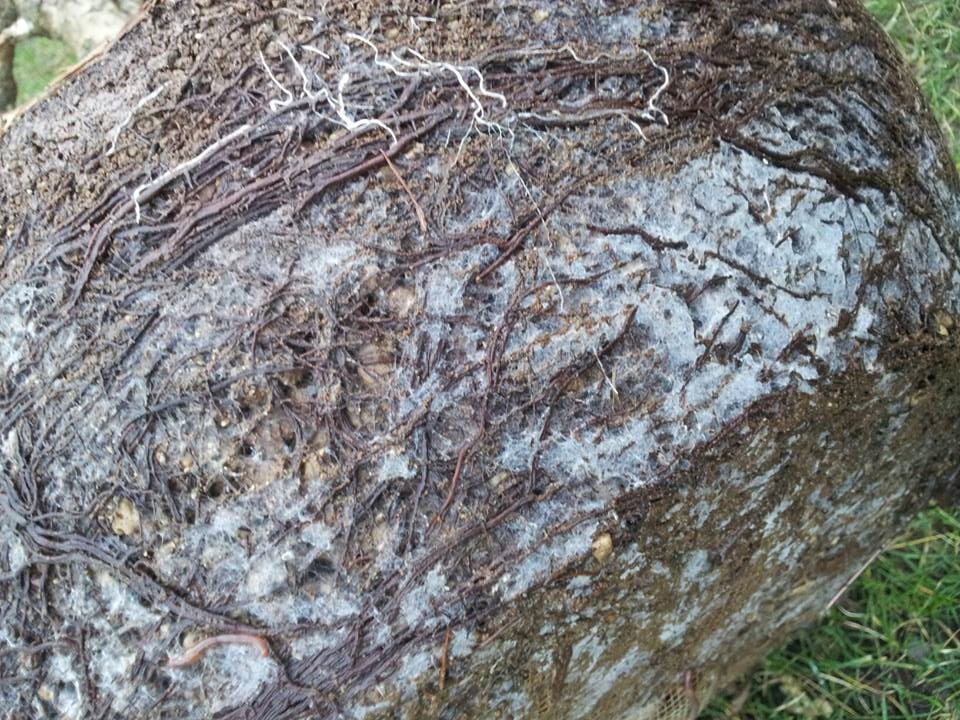
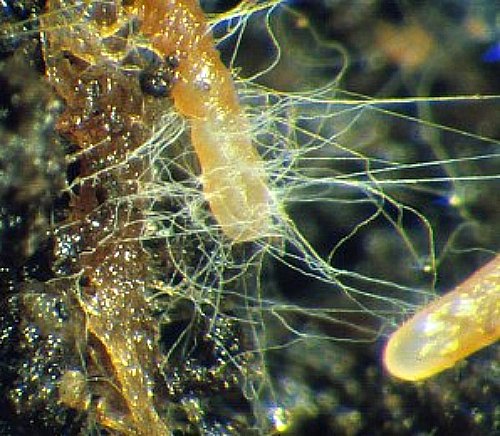
The white threads are Michorrizal fungi.

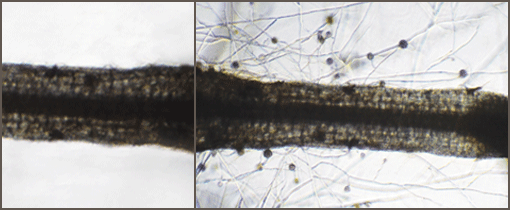
Mycorrhizal fungi occurs naturally in soil. They form a close symbiotic relationship with plant roots. They are called mycorrhizae ,from the Greek “mukés”, meaning fungus, and “rhiza,” meaning roots. Mycorrhizae are considered to be in a mutualistic relationship because both organisms benefit. The fungus receives the products of photosynthesis from the plant and is therefore does not need to find its own sources of energy. At the same time the fungus grows out into the soil and retrieves nutrients, especially phosphorus and nitrogen, and passes these back to the plant. It is usually seen as a network a very thin, white threads spread throughout the soil in close contact with roots.

mycorhizes

The root on the right has the fungus in close contact to enhance the absorptive area of the root. This means more nutrients and water can be absorbed than the root on the left.

However, in most soils that have been disturbed by residential construction, or intensive cropping practices with applications of fertilizers containing pesticides and other chemical products, the mycorrhizae content has considerably diminished, and has become insufficient to significantly enhance plant growth. Numerous experiments have shown that plants without mycorrhizae cannot cope as well with low mineral levels as those that have mycorrhizae.

larix-michorriza

In a Bonsai pot, the soil is a very controlled environment. The Bonsai artist determines what goes into the soil, what it consists of and how much water is given.

When mycorrhizal fungi colonize the plant’s root system, they create a network that increases the plant’s capacity to absorb more water and nutrients such as phosphorus, copper and zinc. This process in turn enhances growth and favors rapid development of roots and plants. Where this fungus is present in soil, a much faster establishment rate of new roots is observed as well as a reduced water need of up to 30%. The reason for this is that the micorrhizae ensures a much larger surface area is available for the absorption of water and nutrients. The plants are healthier and grow faster.

There is also evidence that these fungi can also improve the structure of the soil. The threads grow through the growing medium and aggregates the soil. This allows for more air to move through the soil as well as enhancing drainage.

Back to Bonsai cultivation. As mentioned before, the soil in a Bonsai pot can be very sterile as it could consist of particles that do not necessarily contain living organisms or lots of organic matter. These could include valuable soil bacteria (nitrogen fixing bacteria) as well as michorrizal fungus. In the absence of these, it is important that the Bonsai artist allows for modsc_1936re (more frequent) fertilization to take place. Michorrizal fungus spores can be bought (I have not seen it in New Zealand yet), but a much less expensive way to inoculate your Bonsai soil with the spores is to use a bit of the original soil in the Bonsai pot at planting time. I find that this is especially important when I plant Pines and other conifers.
In summary: Most plants in nature live in a relationship with Micorrhizal fungi. Both organisms benefit from this relationship. Most Bonsai soils will not contain this fungus and by adding the fungus to Bonsai soil, the plant will establish faster, take up more nutrients and will need less water. Something to think about when it comes to transplanting time.

Nebari – The Root of the Matter

938277CE-FFB2-4BE6-B1C5-98D83AA77553

These roots have grown over time, dropping of the side of a cliff.

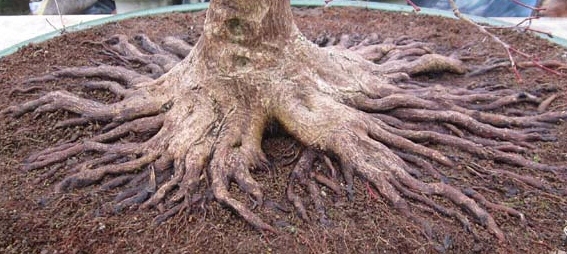
No, we are not talking about the Nebari fictional alien race from the planet Farscape, but the Japanese term generally used to indicate the roots and specifically the root flare at the bottom of the trunk where the root region starts. It also indicates the visible surface roots.

Wikipedia refers to it as: “Also known as “buttressing”, nebari is the visible spread of roots above the growing medium at the base of a bonsai. Nebari help a bonsai seem grounded and well-anchored and make it look mature, akin to a full-sized tree.”

img_1634

My idea is to write three or so Blogs focusing on Nebari and the development of roots. There is no doubt in any Bonsai artist’s mind that the roots of a plant is where it all starts. Healthy roots = healthy plant (generally). A plant absorbs most of its water and nutrients from the soil through the roots. We therefore have to know something about soil and its water retention and draining properties. Not all soils are created equally. We also need to know something about the physiology and anatomy of roots. This knowledge will help us to understand many of the concepts around root pruning. This will come in later Blogs.

Autumn bonsai images 2014 (17)

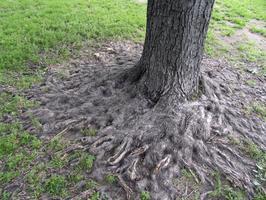
A tree growing in a woodland area. These roots definitely add to the character of the tree and indicate that it has been there for a while.

Getting back to the Nebari, the main aim of establishing a root flair at the base of a tree is to indicate age. A wider base caused by a flaring just above the roots, helps to establish the taper of a tree. One way to develop taper is to increase the circumference of the tree at the base and to keep the top of the tree relatively thin. Young trees do not have a huge flair at the base, but older trees show this without fail. In saying that, there are trees that are used for Bonsai that do not show a big root flare. Junipers come to mind here.

root310

The roots are spread over a flat surface and tied to this surface.

There are multiple methods to improve the Nebari of a Bonsai tree. The first one is the continuous root pruning of downwards growing roots. For the health of the tree it is advised that this is done over time to enable the tree to grow new roots in the place of the removed roots. A second method is done through air layering. This is simply done through preparing the bottom of the trunk as one would for air layering and heaping up the soil or packing sphagnum moss around this area. Roots will over time establish themselves in that area. I have read about a method where a wire is bound tightly around the trunk just above the roots. The flow of nutrients will be impeded and that will cause new roots to grow from above the wire. I have not tried this method myself before and cannot comment on how successful it is. Other methods include drilling holes through flat tiles and tying the roots of the tree in a horizontal direction to the tile with wire through the drilled holes. It could also be done through grafting.

In the end, the Nebari plays a vital role in the aesthetics of the tree. It is crucial thfotolia_2553306_XSat some sort of Nebari be established as it indicates age, shows that the tree is balanced and sturdy and has been there for a long time.
The next Blog will address the science behind root development.

Movement and Flow in Bonsai

Let us first define the two concepts to ensure that we are all on the same page during this discussion. Movement is what physically happens with the trunk and branches. In other words, whether the trunk moves to the left or to the right or in an S-shape to both sides alternatively. Flow is the general direction that the tree leads the eye towards. There are a few things that determine this flow.

bonsai_wallpapers-17

A formal upright tree does not necessarily show flow as the idea here is that the tree is symmetrical and well balanced.

Most sources recognise that it is the first or primary branch as

Homemade Bonsai

The primary branch’s movement is towards the right and the apex is also in that direction. Overall flow therefore is to the right. It can also be seen that the tree is planted towards the left of the mid-line of the pot.

well as the apex that determines the flow direction. I would like to add the trunk line to this as well. Although the trunk could be leaning towards the left, the primary branch could be moving to the right and the apex could be on that side as well. Overall the flow will be to the right. All the other branches and in some cases the nebari, will have to be designed to follow this flow pattern.  What if this does not happen? The main issue will be that the tree will look unbalanced and disturbing to the eye.

sample bonsai

This is an example of a tree with flow in all directions. The trunk on the right flows to the left, the trunk on the left, flows to the right.

Flow is important as it will determine the placement of the tree in the pot. Trees should be potted behind the mid-line of the pot, but the flow will determine whether it is planted to the left or right of the mid-line. As said, it comes down to the flow. If the flow is towards the left, the tree will be planted to the right of the mid-line. If the flow is to the right, the tree will be planted to the left of the mid-line.

bonsai-17

The primary branch is towards the right, so is the apex and therefore the overall flow is to the right. The tree is therefore planted towards the left of the mid-line.


014

This tree has its primary branch moving to the left and the apex is on that side as well. The trunk is also slanting that way which makes it easy to determine that the overall flow is towards the left.

The display of the tree is also determined by the flow. The placement of the companion plant (kusamono) will be on the side of the flow direction. For example, if the flow is to the right, the kusamono will be placed on the right. This becomes very important when shohin are displayed in a multi-tiered stand. Trees should either be all adding to wards the overall flow of the whole display, or they should complement each other by forming a “closed” display. This means that they do face each other within the display. It all depends on the effect that the artist wants to create.

display-10

The main tree shows its flow to the left and the companion tree shows its flow to the right. These two trees complement each other.


1078632432_2rHzx-S

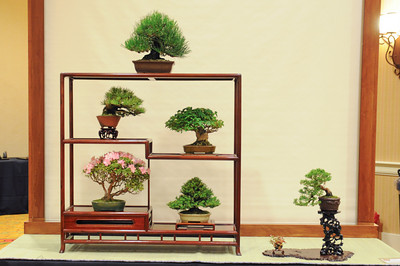
In this shohin display the top tree is balanced with no overall flow. The next shelf down shows the tree on the left with its flow to the right and the opposite is true for the tree on the right. On the bottom shelf, the tree on the left flows to the right, the tree on the right looks relatively balanced and if anything, the primary branch could be moving to the right. In this case the companion plant to the right of the display, flows to the left. A well-balanced display.

The principle of flow and the calming effect that it can have on the observer cannot be underestimated. It is the same when one looks at a masterpiece painting. There is always some sort of flow to be seen. This is either in a specific direction (see kusamono placement above) or it is towards a focal point within the artwork (see shohin display above). This principle can therefore be seen as a wider artistic principle and not only applicable to Bonsai. For me it also has to do with the flow of energy. The overall flow of the tree indicates a flow of energy. This adds to the dynamic nature of a display or to a more relaxed feel. Where there is flow in too many different directions, the energy flow is all over the place which adds to a feeling of discomfort when observing the display.

References:

I would like to acknowledge the websites that the photos came from as used in this blog post.

http://michianabonsai.club/sample%20bonsai.jpg

https://sanaakosirickylee.files.wordpress.com/2012/05/bonsai-17.jpg

https://encrypted-tbn3.gstatic.com/images?q=tbn:ANd9GcS9a_9UTyb_T8ZVzWH445ALrtjodYvDzxgwOtL3JN6aJAsICNlD

https://encrypted-tbn0.gstatic.com/images?q=tbn:ANd9GcSIAPeSEvPE8vsZk9tD36gsAcAQQR_Ee7UPYtL0bwceqOcqU9KP

http://dupuich.smugmug.com/Bonsai/Exhibits/GSBF-XXXIII-Convention-Exhibit/DSC0047/1078632432_2rHzx-S.jpg

http://bonsaitonight.files.wordpress.com/2009/05/display-10.jpg

Siberian Elm – Ulmus pumila

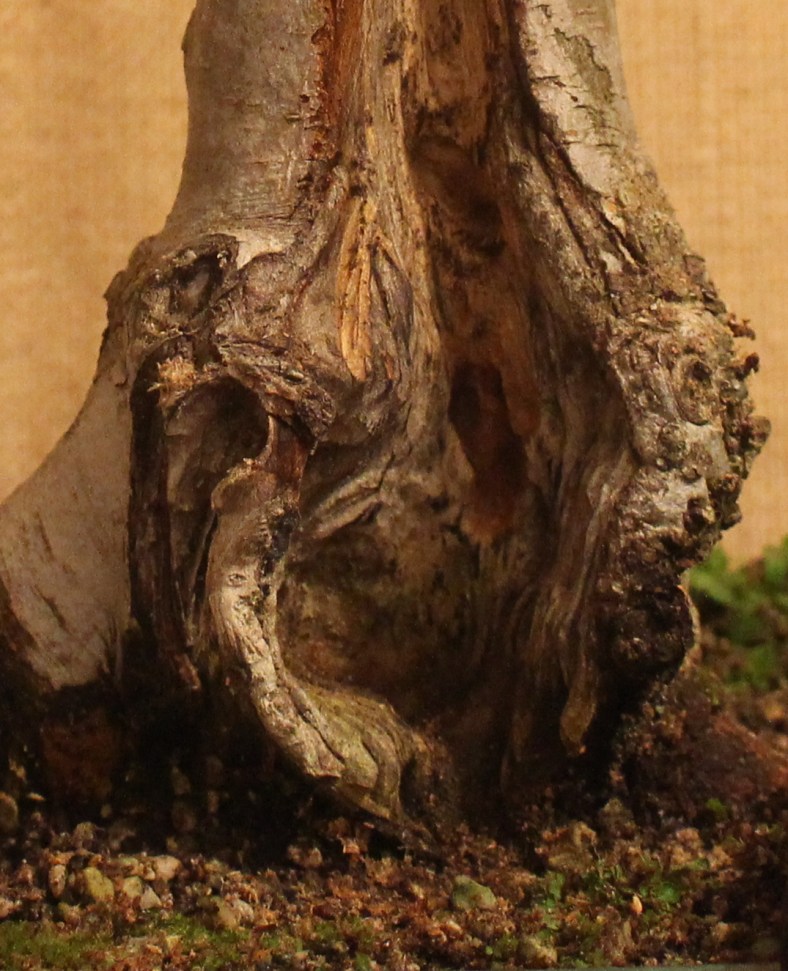
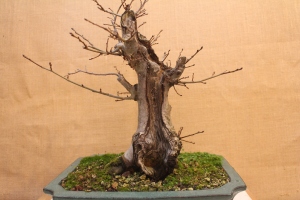
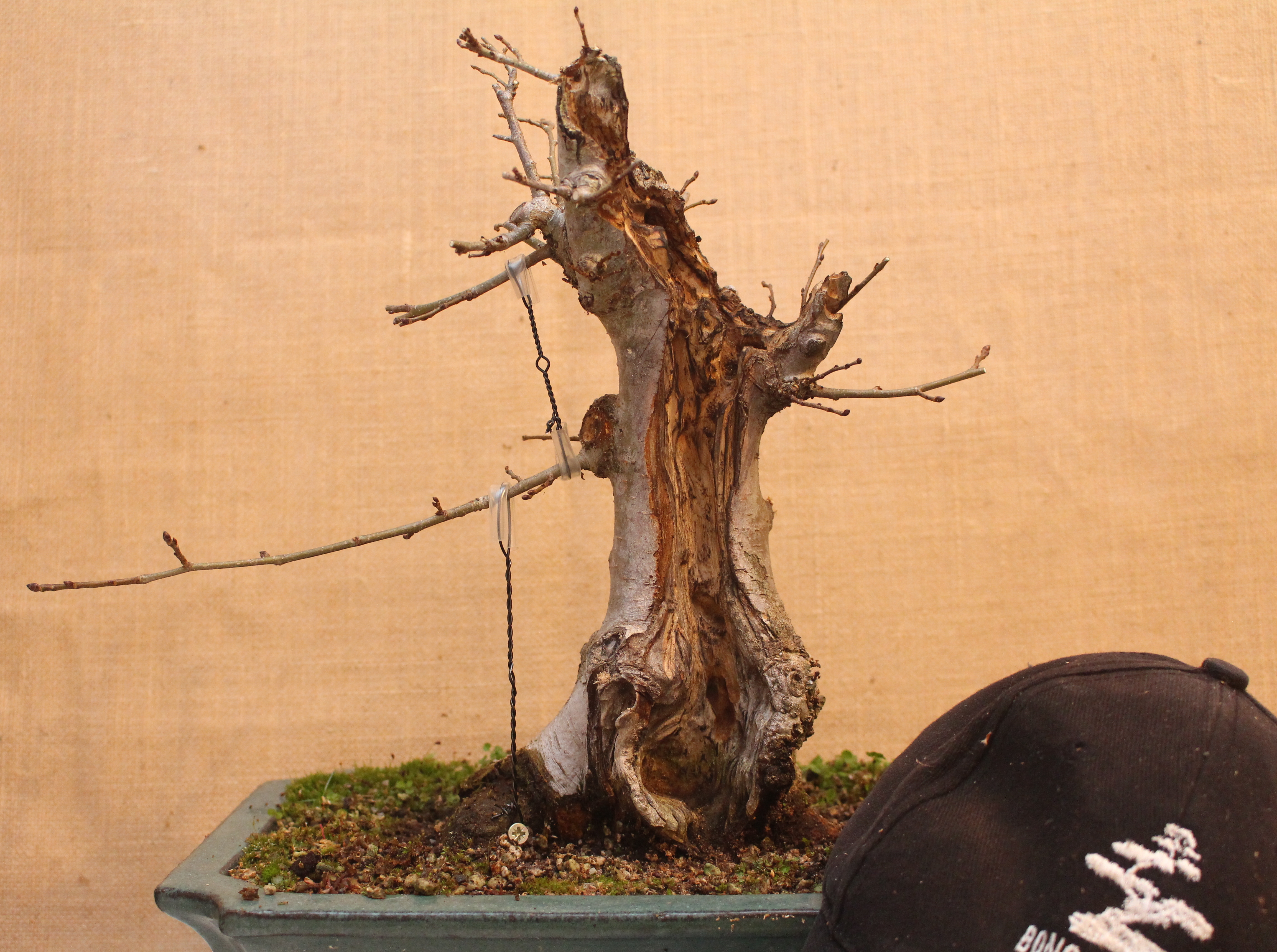
This little Elm had a huge ugly cut right at soil level when it came IMG_2951into my possession a year and a half ago. This was carved quite deeply to get rid of and then it was extended upwards to try and get a more natural look. The carving was further worked on today. The large carving at the bottom has weathered well and the shari extending upwards from here was made deeper as well as fine carved with a Dremel. A small carving was done on the back where another large (not as large as the front one) cut was made. This resulted in a hole now going through from the back to the front. It is quite high up near the apex.IMG_2953
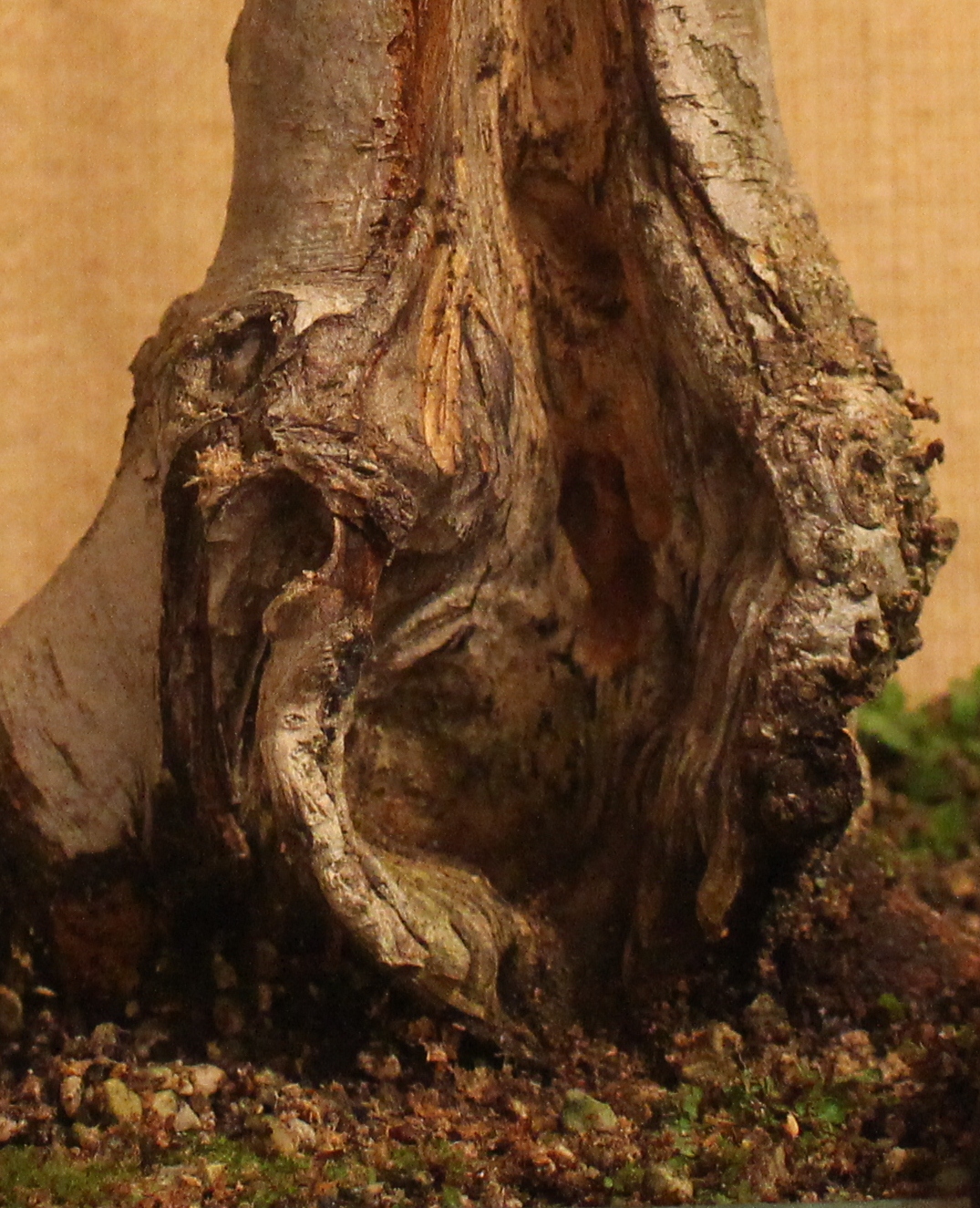
The leaves have now all dropped and it was decided to work on the carving a bit more and then to also pull the branches on the left down a bit. The flow is to the left. The branches on the right will be kept short and at the next repotting, the tree will be slanted to the left slightly and it is leaning to far forward at the moment.

I have not seen too many of these around and treat it as I would any other Elm. The leaves are still very large and with proper pruning it will hopefully get smaller. The bottom left branch will also be left to grow as it needs to get some width on it.IMG_2956

Swamp Cypress – Taxodium distichum

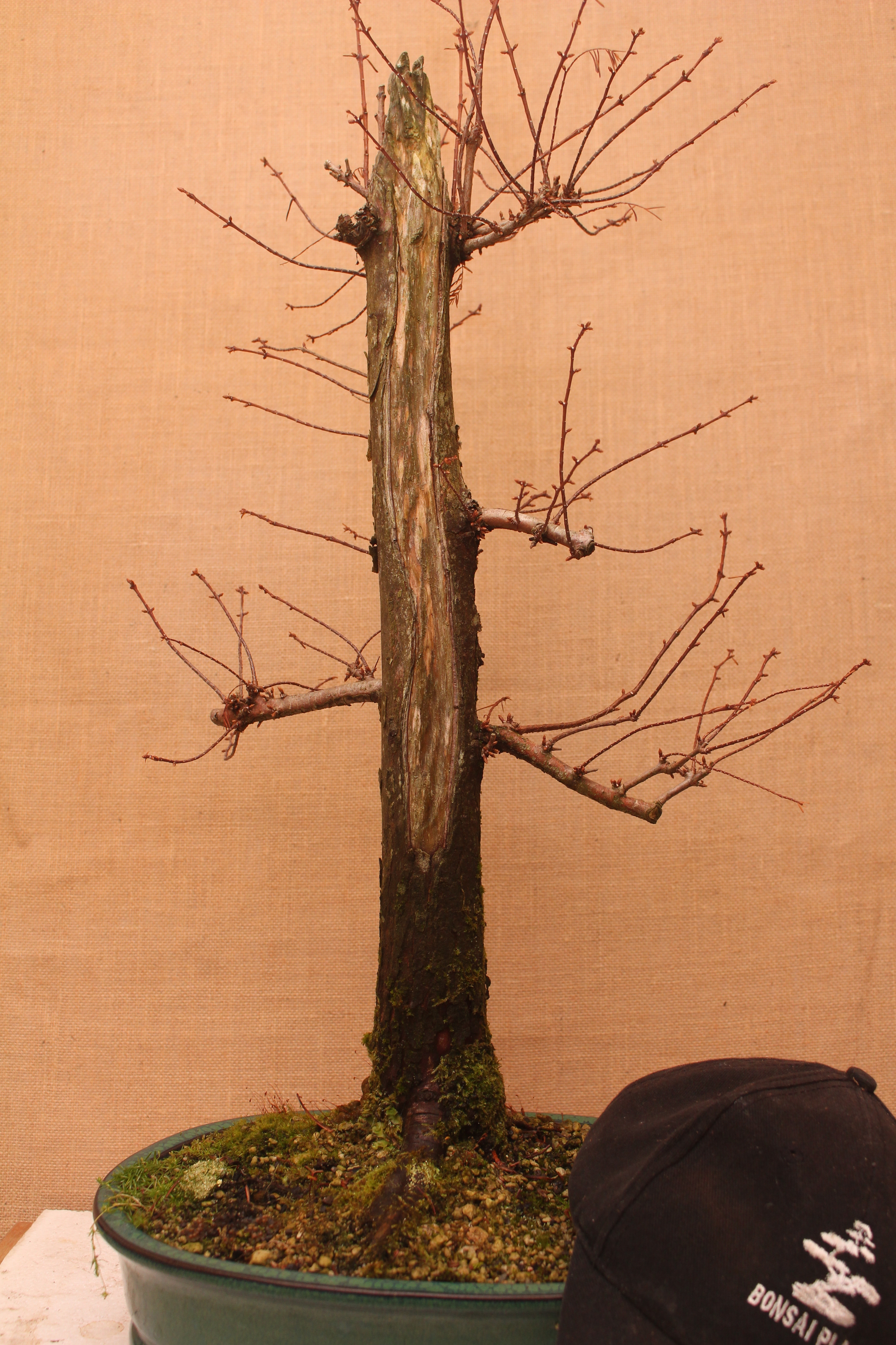
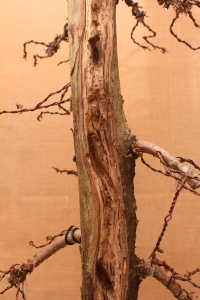
IMG_2943Two years ago this was a two and a half meter nursery tree. I chopped it down to about a meter at the nursery as I could not get it in my car. Then the journey began. It was potted in a Bonsai pot and left to grow, It had a light prune and a bit of a carve a year before and today it was time to revisit the shari and to get some wiring done. The buds are very fragile this time of year and great care has to be taken to not break them off.

The carving wasIMG_2945 done first. The original carving was done with very rudimentary tools. I now have a rotary carver as well as a router that I use for carving. I went deeper today and added a bit more detail to the top. Out came the burner to get rid of all the frilly bits. The bark and branches were protected by aluminium foil. It was finished off with a wire and then a nylon brush.
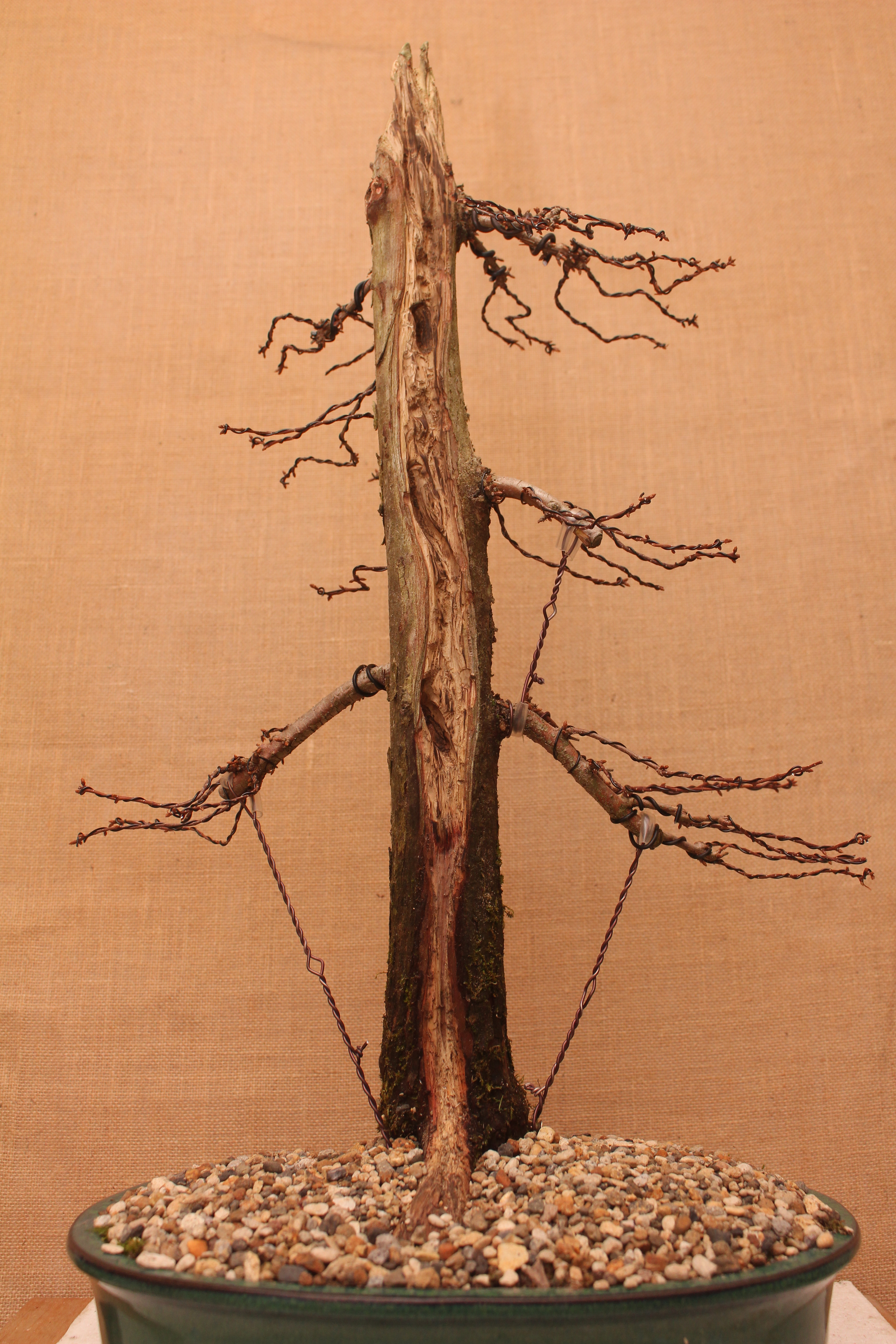
I used guy wires to pull the thicker branched down and then used 1 mm wire to wire and place the thinner branches. Now it has to rest and grow when Spring comes around again. I will also have to repot at a better time as I discovered that the soil was very wet. It is Winter in New Zealand now and it has been raining non-stop over the last 48 hours. These trees prefer a bit of a wetter soil, but this is just too wet at the moment.IMG_2947

This is a very easy tree to grow and it buds profusely in spring and carry on with this almost right through Summer. There are gaps on the left hand side that must be filled. I will keep an eye on any buds forming in that area like an expectant father. The top branches also must be shortened, but I will leave it as is for now as I need more buds and growth in that area to replace some of the existing branches. It has a soft foliage and contrasts well with other trees as the leaves are a very light green. These turn yellow-brown in Autumn.

Creativity and Bonsai

rs2

Tree by Robert Steven

There is no doubt that Bonsai is a Creative Art form. Once the horticultural needs of the plant is met, the creative and art side of Bonsai kicks in. In thinking about this concept of creativity and how it applies to Bonsai, I had a lateral thought moment that it is not dissimilar to what Maslow proposed as the hierarchical needs of human beings. The major difference is that we do not work with an organism that can think when it comes to Bonsai. The lowest level of needs around the Biological and Physiological must be met for the tree to stay alive and the next levels applies to us and not the tree. Higher levels of Maslow’s theory do refer to the need for creativity and maybe through that, a level of self-actualisation for us as humans. There is a need for us to be creative. Not all of us are in touch with our creative sides. Mine came late. I realised that I could grow things, that I am good at educating people and once I was exposed to the Art of Bonsai, I found an area where I could feed this need to be creative and become involved in another where I could educate and be educated.

lindsey-bebb

Trees by Lindsey Bebb

What is creativity? I have consulted the writings of some of the gurus on this topic and came up with the following:

  • It is the process of having original ideas that have value – Sir Ken Robinson.
  • The phenomenon whereby something new is created which has some kind of value – Wikipedia (probably not a guru).
  • Micheal Gelb suggests that for original ideas to provide value, they must be translated into action. He also refers to the term “creative energy”.
kimura

Trees by Masahiko Kimura

How can we apply this to Bonsai? I see three movements in the Bonsai world. The one is the creation of Penjing – landscape scenes mainly out of China. Another one is the following of the rules and “laws” of the traditional Japanese style and the third one, which is growing rapidly throughout the West, a more informal, creative style. Whatever path you take, creativity is needed to pursue it successfully. Sir Ken Robinson’s idea of having original ideas probably leans itself more to the more informal style as one is not necessarily bound by the “rules”. Although I have made a thorough study of both Penjing and traditional Bonsai, I find that I do lean towards a more informal, creative style. Why? It could be that it suits my way of thinking or it could be that the material I have available to work with, leans itself more towards it. The New Zealand Bonsai scene is relatively young compared to the rest of the world and we are bound by regulations through which we cannot import trees and have to rely on what is already here and then work according to what these trees allow us to do.

john-naka

Trees by John Naka

Is this a problem? No, I do not think so. I just had the privilege of helping to select the trees that will be on display at the National Convention later this year in Christchurch. The trees put forward for selection are of good quality and very dissimilar to each other. The variety tells me that there is a creative spirit or energy (Gelb) present. The lesson that I get out of this is that once we throw the shackles of conformity and “rules” off, creativity is enhanced.

ben-oki-11

Trees by Ben Oki

This is seen throughout the world. I am not saying that the rules and the foundations of Bonsai must be thrown away, what I am saying is that it is clear that where people have the opportunity to be more creative through what the tree allows us to do, the results are as spectacular as when we follow the traditional rules. It is fascinating watching our best Bonsai creators in action and studying their creations. Even the ones with a thorough traditional Japanese grounding show that you have to respect the tree and when we especially work with wild harvested material (Yamadori), the tree’s history must be respected in the design.

What does this mean for our creativity? You have to let the tree lead you, but within that you still have options. Some of these options will include the following of traditional “rules”, but where the tree does not allow this, one will have to apply original ideas (back to Sir Ken) and if this leads to a well-designed Bonsai tree, then creativity is seen in action. It has value as it has added to a body of knowledge, ideas and even new techniques that could be used in future. I can use the composition of Music as an example. The composer needs knowledge, technique and an open mind to compose. The composer would have studied Music, played it, composed it, made mistakes and would have experienced success. The same is valid for Bonsai creation.

Study what is available, practice a lot, work on minor trees and work on superior material as well, but above all, ensure that you have an open mind. What does the tree allow you to do? How do you use that to create beauty? Do you have original ideas? Do you add value?

My last thought for today: Look outside of Bonsai for inspiration. Read and use You Tube to learn about other creative pursuits and let these inspire you to be even more creative.

References:

Creativity on demand by Michael J. Gelb. A great read for general creative inspiration.

Creative Schools by Sir Ken Robinson. I am an education leader (something has to pay for my Bonsai addiction) and find that I can apply ideas from all over to my recreational and creative pursuits.

Wikipedia. It always gives me a heads-up when I start to wonder about things.

The photos on this page ashamedly (on my part) comes from this website: http://webecoist.momtastic.com/2009/06/09/tree-art-6-amazingly-creative-bonsai-artists/

I apologise if I have broken rules to use them here, but all I am trying to do is to promote Bonsai in general and certainly not for my own gain.

image

Liverwort and Bonsai

IMG_0035Liverworts are flat growing green plants, closely related to mosses (Bryophytes). They have no stem and only a thallus, the flat leaf-like structure that is seen above ground. They belong to group called Hepatics and belong to the Marchantiophyta, a division of bryophyte plants, the mosses. These plants are primitive, not only in structure, but also in the fact that they are old. Some sources mention that they transition onto land during the Devonian Era (400 million years ago). Goes well with Bonsai then, I hear you say. Not really.

Bonsai growers will find these plants in moist areas. Where I live we have a high rainfall in winter and I have to be very careful with watering. This is usually taken care of by ensuring that the soil medium is free draining. Most of the liverworts that I see growing on soil come from nursery sourced plants, probably because the soil contains the spores and the fact there could be lot more organic soil in nursery plant soils.IMG_0032

The problem for me is that they can rapidly cover the surface of the soil and prevent water from penetrating the soil. This is not necessarily a problem as they already indicate that the soil is too wet. This layer of Liverwort can also prevent proper air circulation through the soil. I have also had experience of Liverwort growing over moss (I want the moss), suffocating the moss to death.

IMG_0034These plants reproduce asexually and sexually. They produce bumps (cupules) on the leaves, usually during late autumn, containing “eggs” called gemmae. These produce new plants. The sexual reproduction produces spores which germinate and form new plants.

As said, these plants can be an indicator that your soil or growing medium is too wet. If this is the case, it is obvious that the medium must be changed to be more free draining. Larger inorganic particles can be used to do this. If it is still a problem, look at the top layer of the soil. This could contain spores of liverwort. Scrape the top layer off and replace with a coarse material like gravel or pea metal.IMG_0035

Harsh chemicals could be used to spray on the liverwort to kill them off, but I have found that dabbing or brushing vinegar on the leaves of the liverwort, kills them off as well.

References:

http://www.backyardnature.net/liverwrt.htm

http://www.kiwicare.co.nz/help/problem/?sid=liverwort

Ian Sayer – Bonsai artist.

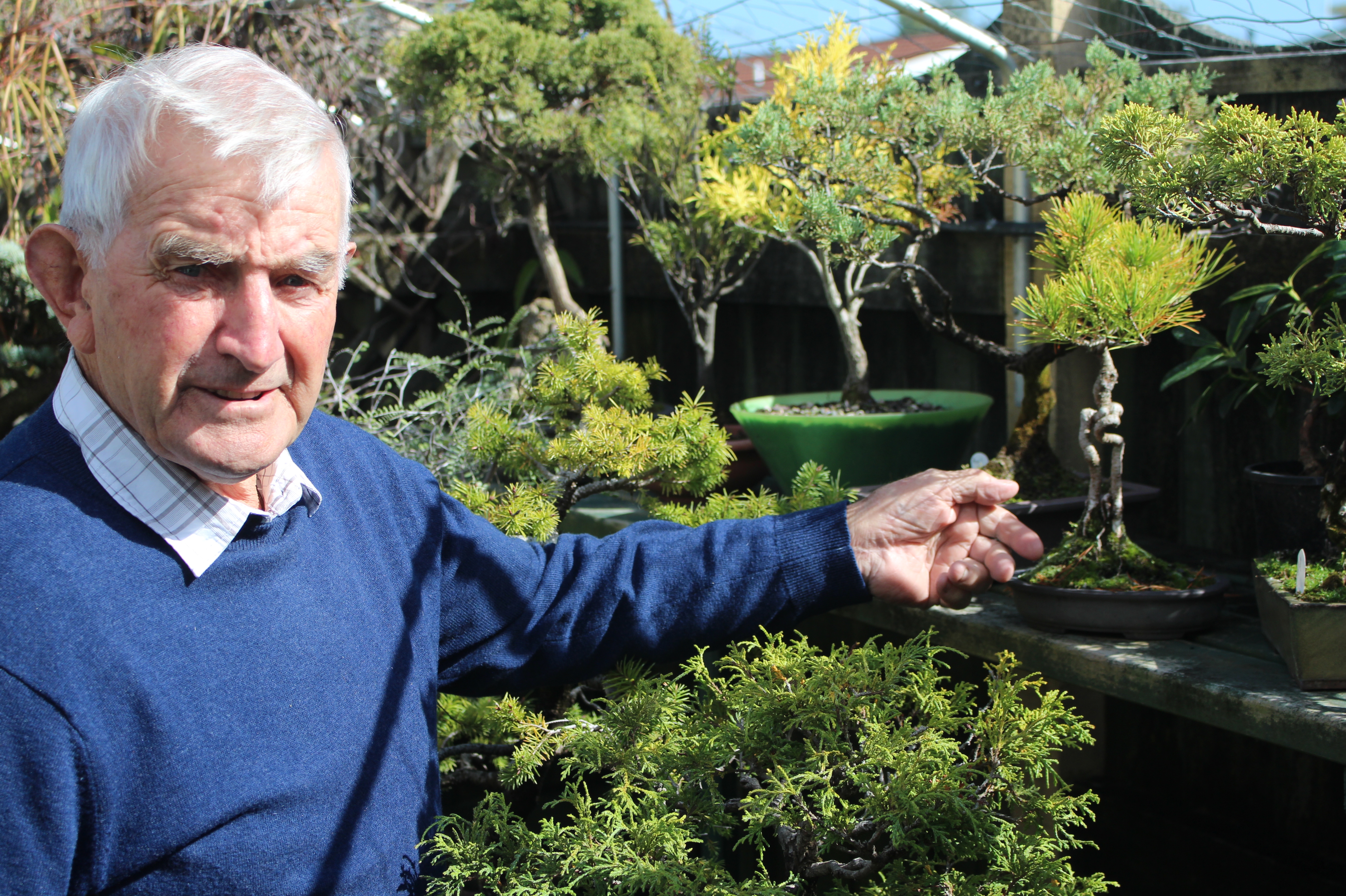
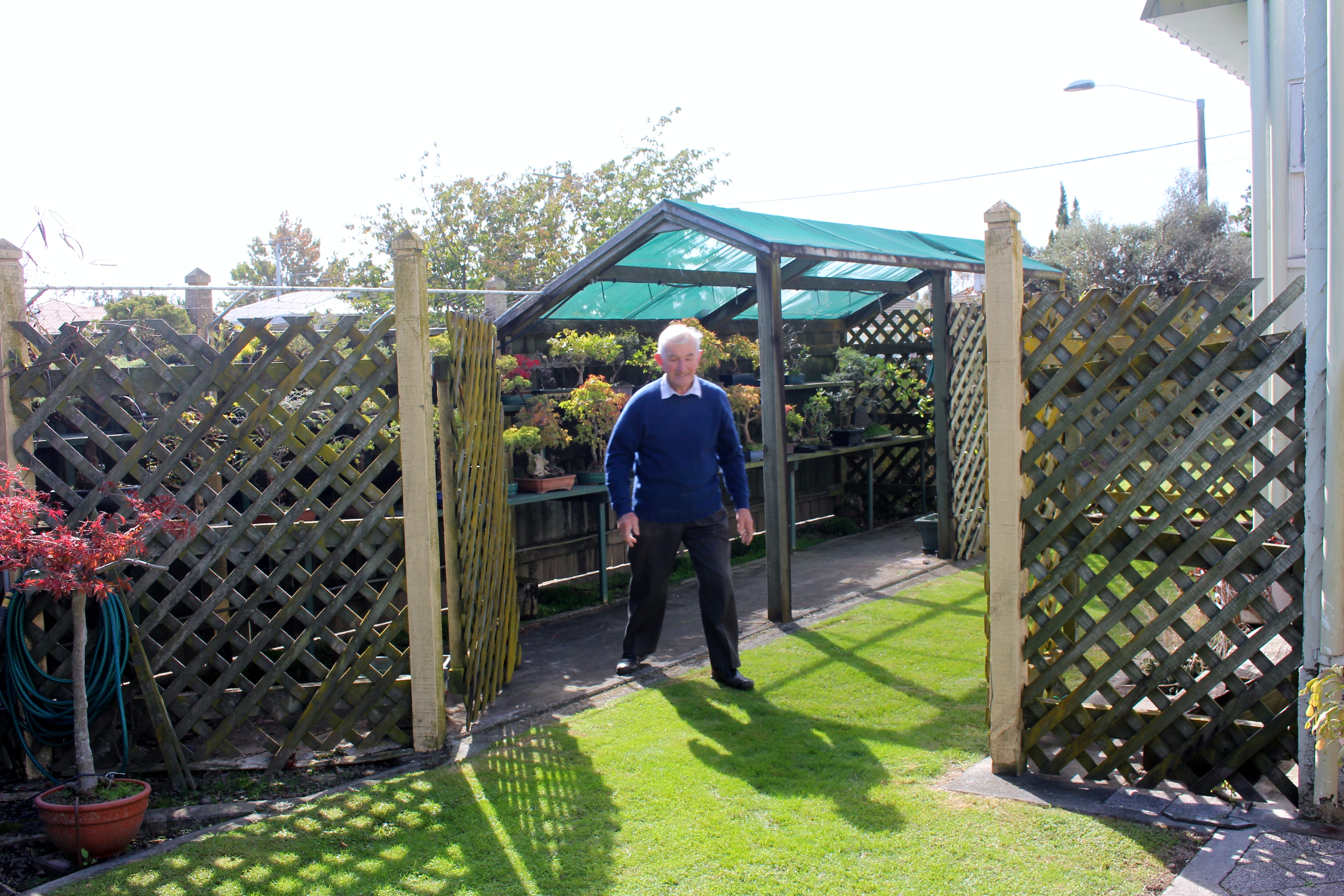
Ian Sayer 002I visited Ian Sayer recently to talk to him about his experiences and journey with Bonsai. Ian started his interest in 1991 through Malcolm Potts. He was at the time building a house in Taupo and stopped for tea where he saw some small Kahikatea trees and brought them home. During that time Ian was involved in Scouting and also had other interests, but Malcolm’s trees won him over. He can still remember attending his first Bonsai meetings in his scout uniform as they took place on the same night. His only regret, like most of us, is that he wished that he started twenty years earlier.

Ian Sayer 011Ian also mentions the name of Bob Langholm, a person that he was very impressed with and who influenced him positively in his pursuit of Bonsai. He went to the conference in Matamata in 1992 and met Bob for a second time. Ian also loved going to the National Conferences as he not only learnt a lot, he enjoyed the fellowship around the Bonsai trees. The demonstrations are highlights for him as it helps to broaden his own perspectives. An interesting fact is that he never showed any of his trees nationally as he found the transporting aspect quite hard on the trees. He has however no problem with showing his trees locally in the Hawke’s Bay and love hosting guests to see his collection at home.

Ian Sayer 013Ian prefers to work with Kowhai and Junipers. He loves Pines and says that they are very forgiving and that they can take a lot of punishment. He collected most of his Pines from the Napier – Taupo road. One of his tips during the visit was to always leave a tree collected from high altitude for at least a year, but preferably two alone before you start to design it.

Ian Sayer 017He is passionate about his local club and has served 14 years as Secretary of the Hawke’s Bay Bonsai Club. Ian took a short break from his secretarial duties, but is now back in the saddle. He loves doing demonstrations. He believes in a simple mantra which is: Show people what to do, teach them individually and then let them do it for themselves.

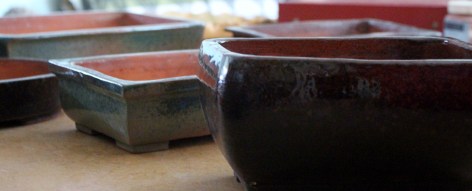
Ian Sayer 050Ian is also a potter. He makes his own pots and has been doing so for years. At the time of the visit he had quite a few decent sized pots in an oven.
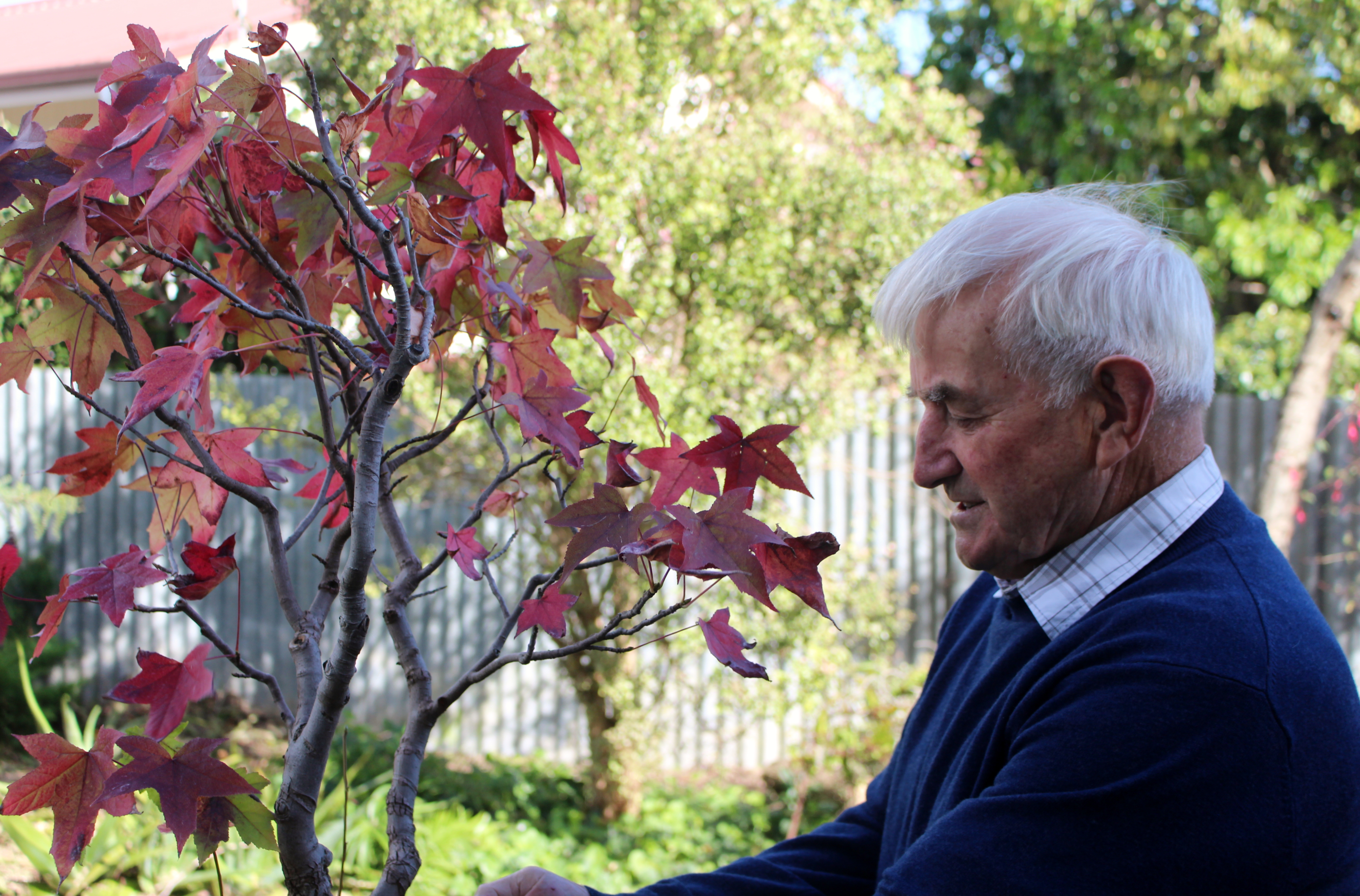
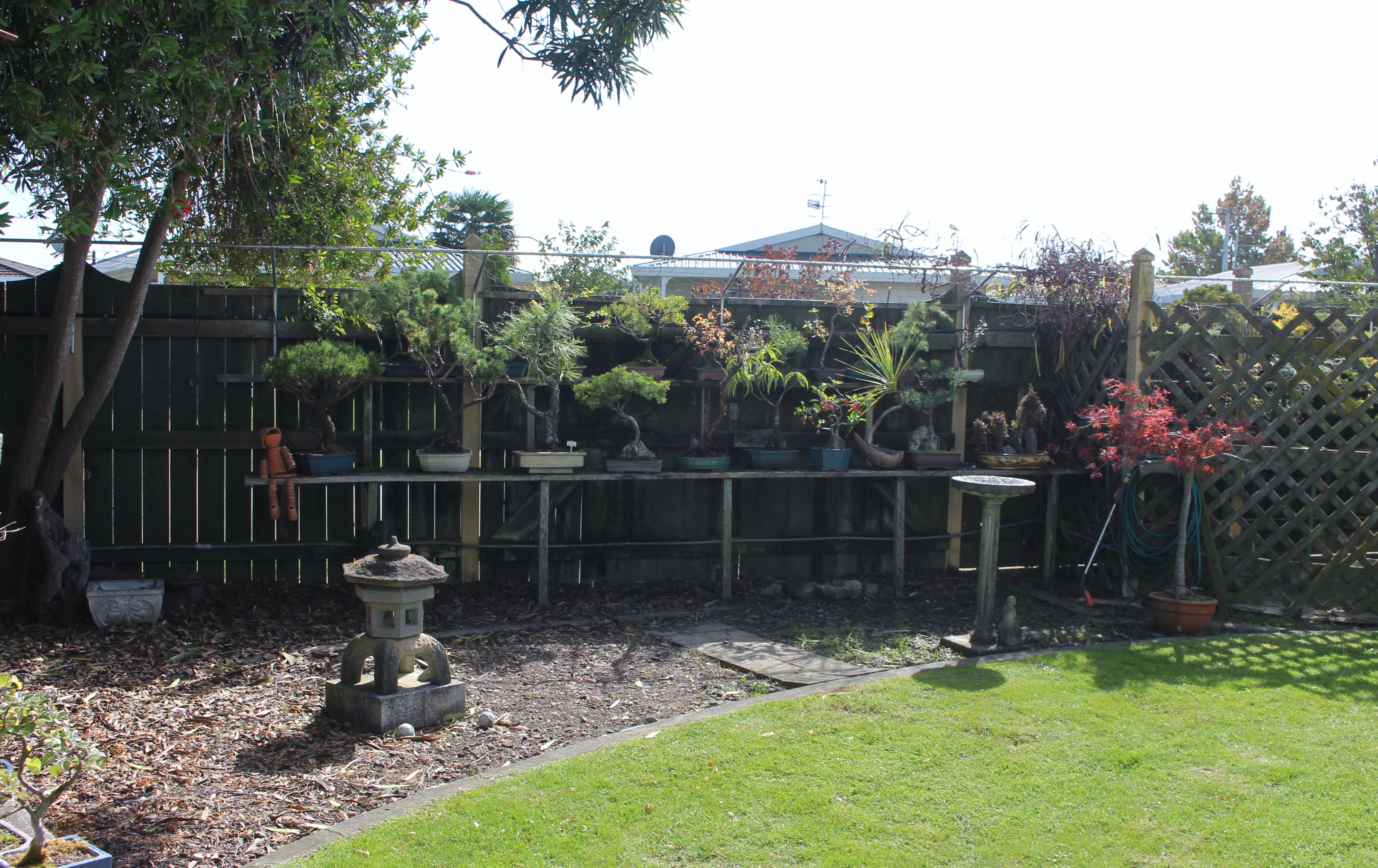
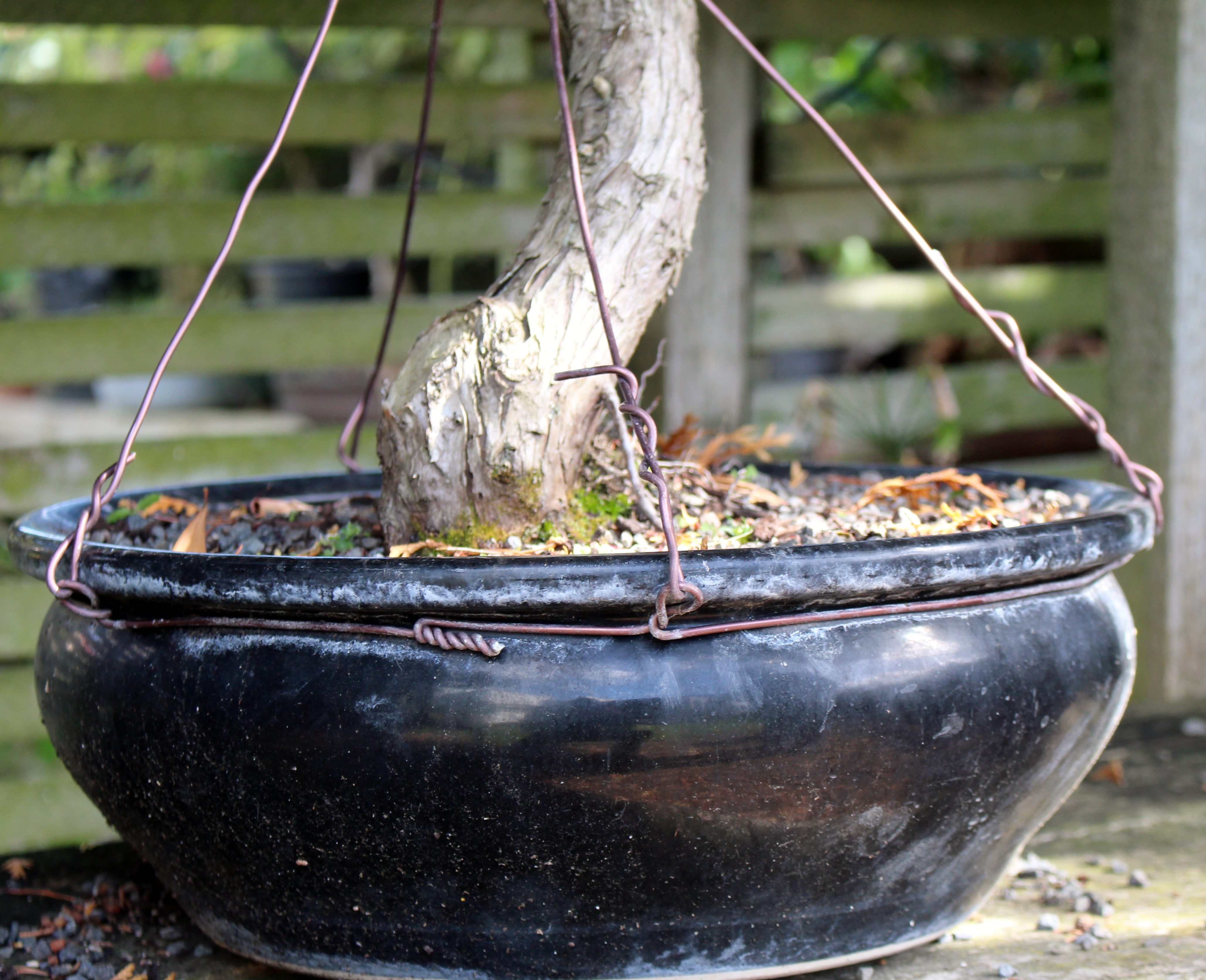
Ian Sayer 011Ian also gave me one of the newsletters that he produces for the club. He produces an eight page booklet every month. These contain a variety of information on Bonsai. Ian also organised the National Conference in Napier in 2007. This took place in Ahuriri in a theater hall. A highlight for him was having the Engelbrecht family on stage for a demonstration.

Ian Sayer 026Ian is worried about the lack of growth of Bonsai in New Zealand. He says we need to get our Bonsai trees out into the public arena, have more open displays and demonstrations. Like me, he believes that there are gems (Ian is one of them) tucked away in backyards all across New Zealand. He mentioned the names of John Austin and Bill Young, two people in the Hawke’s Bay with excellent trees. Ian says that it all starts in Clubs. We have to get the current ones more active and to participate in club activities. The best way to do this is to shoulder tap club members and ask them to do specific things. Most people do not say no and with support will grow within themselves and their Bonsai trees will follow.Ian Sayer 051

I am sure that with Ian Sayer in the saddle at Hawke’s Bay Bonsai, the club will grow very strong again. I am personally quite excited as we had preliminary talks about a combined display in the Tararua district to promote Bonsai here. Thank you for the time spent with you, Ian.Ian Sayer 034

Ian Sayer 052

Shorter days, colorful leaves.

IMG_1899For us in the Southern hemisphere the leaves of our deciduous Bonsai trees are starting to change color and they will soon be on the ground. In the Northern hemisphere Spring growth is to be seen everywhere and I have noticed a proliferation of photos indicating just that on Social Media. The difference is that the daylight hours are getting less in the South and the opposite is happening in the North. Suffice to say then that it must be the availability and intensity of light that triggers these phenomena. Today I would like to explore the color changes in leaves during Autumn.

IMG_1235We know that there is a pigment in leaves called chlorophyll. It is the site where photosynthesis takes place in leaves. This is the process where water and carbon dioxide gas with the aid of light energy is converted into sugars for plants to use as food or to be stored.

As the days (light) get shorter, there is not enough light energy for photosynthesis to take place at optimum levels. The trees must rest and basically shut down and the only food available to get through winter, is what is stored. As this progresses, chlorophyll disappears from the leaves and the bright green fades away. Chlorophyll is not the only color pigment in leaves. As the green fades, the other color pigments become visible. These are the yellows and orange colors (carotenoids). In some trees, like maples, the glucose produced during photosynthesis gets trapped in the leaves and the sunlight causes the leaves to turn this molecule into a red color. It is known that the cooler temperatures have a role to play in this. There are other pigments present as well. Red anthocyanin pigments can also be produced during this time.

Currently, my trees, and especially the Maples, are not showing the bright red colors yet. This is late for this time of year. Our night time temperatures have not dropped sufficiently for this to happen. Other climatic factors play a role as well. What is needed for all the splendor of autumn to show in our Bonsai trees is a warm, wet Spring, followed by a Summer with average temperatures and an average rainfall as well as an Autumn with many sunny days and relatively cold nights. There is nothing we can do about any of these except for controlling water, but it might be possible to shift trees in one’s garden during Summer and Autumn to make use of micro-climates caused by other plants and the layout of your garden.

Plant Hormones and Bonsai

Plant hormones have an affect on aspects of plant life. Every cell in a plant can produce plant hormones and these can act in that specific cell or it can be transported somewhere else. There are five major plant hormones; auxins, cytokinins, gibberellins, ethylene and abscisic acid.

5 April 2015 063

Auxins are referred to as growth hormones. These chemicals stimulate plant cells to elongate. They are mainly found in the tips of stems and branches. with this accumulation of auxins in the tips, growth in other parts are subdued. During pruning of Bonsai these tips are removed and the excess of auxins in these areas are reduced. This in turn will allow growth to take place lower down on these branches. This is the so-called apical dominant display. When the auxins are not there, the dominance is reduced and back budding will be allowed to occur. It will also allow branches lower down the tree to develop more. Auxins are also produced in roots.IMG_1888

The phenomenon of phototropism is directly attributable to auxin concentrations. Auxin moves away from light. It accumulates in the cells further away from light and will stimulate those cells to lengthen. As this growth is only on one side of the stem, it “pushes” the stem towards the light. This growth of plants towards light is what phototropism is all about. When we wire stems and branches and bend them in a specific direction, no role is played by auxins. We manually do what auxins will normally do. This also allows us to do things against what the normal plant hormones were programmed to do. We can as an example, bend a branch to force it to grow away from light.IMG_1248

Another practical implication for Bonsai enthusiasts is to regularly turn the trees on the benches as it will stimulate growth around the plant and not only on one side.

Cytokinins promotes cell division, in other words, growth. Where auxins will inhibit lateral buds, cytokinins will promote growth all over the tree. In the absence of auxins, cytokinins will cause lateral buds and dormant buds to grow. Pruning, candle removing and pinching of new growth will all aid in reducing auxin levels and promoting more lateral growth.

Gibberellins are responsible for shoot elongation, seed germination and fruit and flower development.

Absisic acid promotes seed dormancy. It also assists with the opening and closing of stomata.

Ethylene is a gas produced by ripe fruits.

IMG_1871

Scientific knowledge supports Bonsai cultivation

The old debate of whether Bonsai is Art or Horticulture is actually a non-event as we all by now know that a dead tree cannot be designed as a Bonsai and be admired as a living sculpture. We need both. The tree must be kept alive and sculpted to enable the Bonsai within to be shown.

I am in the process of re-reading a lot of my quite sizable Bonsai library. The majority of these books and magazines focus on the Art side of Bonsai cultivation. It is rare to find a good solid article or chapter in a book, dedicated to the Horticulture involved in Bonsai development. A quick search on the Internet shows more of the same. There is a bit more to be found on the Internet, but a lot of this is not necessarily linked to Bonsai specifically. A few examples are of importance here.

The first to mention is the practice of defoliation. When we remove the leaves from a tree, we drastically reduce the level of transpiration (loss of water through leaves), which is an important process supporting the flow of water through a plant. Partial defoliation obviously does the same, but just less. Then there is the practice of leave cutting. This will reduce the surface area of the leaves, which in turn will also have a reduced transpiration level as an outcome. Photosynthesis levels will also drop. There are very good reasons why we do this in the cultivation of Bonsai, but it is a process rarely seen in the cultivation of other plants.

Another of our Bonsai specific activities is the process of deadwood carving or carving in general. Deadwood is dead and nothing much needs to be taken into consideration except for aesthetic principles. When we carve into living wood, things change a bit. Tree tissues are laid down in layers. On the outside we have bark and under this we have the phloem, the tissue that conduct the nutrients produced in the leaves through photosynthesis. The next layer is the cambium. This tissue is responsible for the secondary growth in stems as well as roots. The next layer is the xylem. This tissue transports water from the roots to the leaves. Then we get to the lignin. These are dead cells and make up what we refer to as “wood”. This is the stuff we carve. To get to the lignin, we have to go through the living layers. This needs to be done carefully as we are interfering with some very important processes when we start carving. Not only do we interrupt the flow of nutrients and water, we directly impact on growth. This works well for us as well, as the cambium layer is the one that will help with the healing on the edges of the carving. 

My advice is for Bonsai enthusiasts to read and learn about the science behind our activities as well. Not only will this knowledge help to keep more trees alive, it will help us understand the design process and principles better as well.

Maple Progression

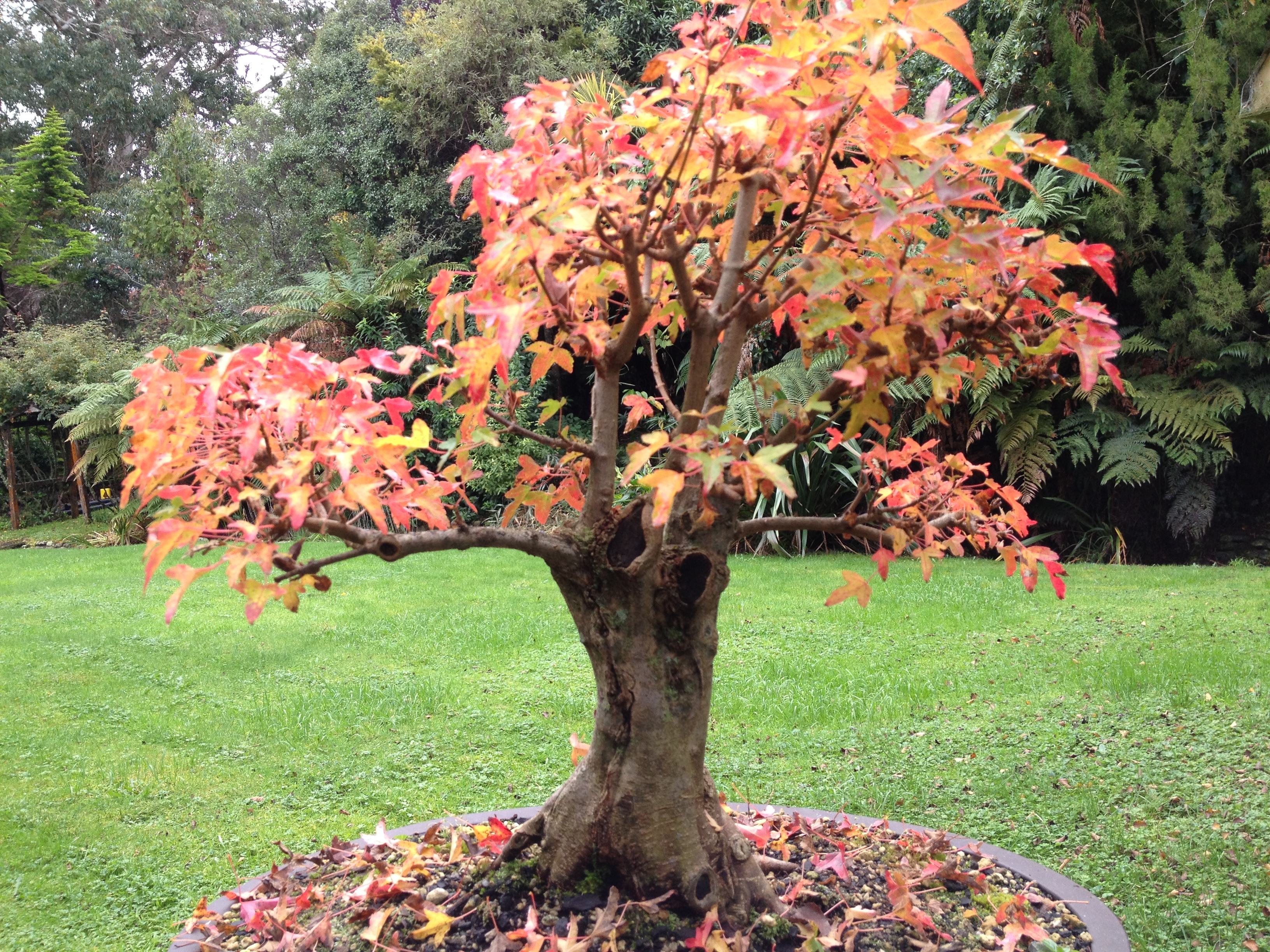
This Acer stands 35 cm tall and is still very much in training. This photo was taken in May 2013 and it shows the tree in full Autumn splendor.

IMG_1235

Soon after this photo was taken the tree lost the last of its leaves and the branch structure can clearly be seen here.

IMG_1420

The branch on the right is too straight, but the tree does need a bit of width. The smaller branch above it still needs to grow to fill that gap. The three branches going almost straight up is also disturbing on the eye. What cannot be seen here is that the tree has very few back branches which means very little depth.

IMG_1899

Skip seven months and this photo is from the other side. A back branch has now been pulled down by the guy wire and the second branch on the left (previous photo right) is filling in nicely.

027

This photo was taken in December 2014.

5 April 2015 029

5 April 2015 030

There is now more width to the tree, but the vertical branches making up the apex have not been sorted yet. That is the next phase of development, a repot come spring and that will be in a smaller, more appropriate pot.

Wisteria – repotting

Wisteria – Just for flowers?

Most articles and books refer to the fact that Wisterias are basically used as Bonsai just to show the flowers off. In contrast to this, Colin Lewis in Bonsai Basics (2008) makes the statement that Wisteria can make interesting trees even without flowers, at the same time acknowledging that it is the flowers that make them spectacular. I find that these plants (climbers) do need to be taken care of in exactly the same way as most other deciduous Bonsai. The tasks of potting, re-potting, pruning, root work, wiring and display is just as important for this species as for any other species of Bonsai.

IMG_1269

I have had a nursery bought Wisteria in a smallish pot for about two years now and recently decided to repot in a larger pot. This is mainly due to the fact that the roots have developed nicely and I am afraid that the smaller pot will not balance and weight the tree down enough when it comes into bloom again. An article in Bonsai Today (96:2005) states that Wisterias reacts well to rootpruning. It also says that you can be quite fearless about cutting thick roots. This is exactly what I did when it came out of the nursery bag and as can be seen from the photo below, it has certainly grown a lot of finer roots. This article also warns against allowing the roots to grow too long as they easily become rootbound.

I have decided to plant it in a hexagonal pot as it is difficult to determine a “front” for the plant. The context of this specific species changes as it goes through its growing season. In winter it is the bare branches, then the flowers and then the leaves with rampant, long branch growth, that needs to be kept in check.  Herb Gustafson in The Bonsai Workshop (1996: 37) shows a Wisteria in a hexagonal pot that resembles my Wisteria quite well. In Bonsai Identifier (Owen, 1998:114) it is mentioned that pots for Wisteria will normally be glazed, sometimes decorated and heavy. With all of this information, the repotting session starts.

The roots as they came out of the old pot (left) and after some pruning (right).

IMG_1276IMG_1278

The plant is tied down and soil added and well worked into the roots with the aid of a chopstick.

IMG_1279

The finished job and ready for watering. Now it is a case of wait and see what it does when it is flowering time.

IMG_1282IMG_1281

Japanese Design Elements

Five Japanese Design Concepts

Dawid de Villiers (PhD)

I have recently seen a poster depicting five general Japanese Design Concepts (www.piktochart.com) and it started to make me think about how these concepts are utilised in the design of Bonsai. These concepts are Wabi-Sabi, Iki, Ma, Mono-No-Aware and Kaketsu.

Wabi-Sabi

This concept is the one that is quite often discussed in Bonsai literature. To find the exact meaning of this is quite difficult and as a non-Japanese speaker, I have to rely on definitions and descriptions from the literature. It is quite clear that there is a wide variety of interpretations of what it exactly means and the literature acknowledges this fact. A concise summary of a possible meaning is that it is a Japanese world view or aesthetic centered on the acceptance of transience and imperfection (en.m.wikipedia.org/wiki/Wabi-sabi). It is the art of finding beauty in imperfection and profundity in earthiness, of revering authenticity above all (www.utne.com). Susuma Nakamura (Neff, 2012) relates wabi to calmness and quietness and sabi to simplicity and oldness (age).

Morten Albek (shohin-europe.com) describes it best in relation to Bonsai. He summarises it as a concept embracing beauty, simplicity, silence, age and imperfectness. In my mind it is that quietness that embraces one when you look at a Bonsai and it brings a stillness and a peacefulness, and at the same time a restlessness due to imperfections that add to the overall beauty of the living artwork. This can be seen in a rustic pot, the naturalness of the tree, not all branches or roots being in the perfect spot, the power exuded by a tree due to its age. It gives a sense of balance between perfection and imperfection with a deep appreciation of nature and the art depicted in that tree. That balance could be observed as a perfectly formed branch and on the trunk a shari. Perfection vs imperfection that all adds up in a deeply satisfying experience of interaction with this tree. It is the calmness and quietness embraced when in the presence of a Bonsai tree showing simplicity and character.

Iki

According to the poster mentioned, it means original, calm, exquisite and sophisticated, but without being perfect or complicated. A rough translation means chic or stylish. This is a term not found in Bonsai literature as it probably is encapsulated in the Wabi Sabi concept. It could mean the design of a Bonsai should be original, in other words, to allow the tree to determine the design, not to copy other trees, but to allow the roots, trunk and branches to dictate the style and movement of the Bonsai. If naturalness is pursued, it should lead to an exquisite and sophisticated tree. This probably will only be seen in mature trees, but is a concept that must be kept in mind during the design phases, spreading across years to reach the ultimate phase where the exquisite nature can be experienced.

Ma

This concept refers to whitespace or emptiness. It defines the element around it and it in turn also is defined by the element surrounding it. The concept of holism comes to mind here. An empty space cannot be defined as such without something bordering it. The design element of empty spaces is a very important one in Bonsai design. The description of creating spaces that will allow a bird to fly through the tree, brings the example of especially Tui that can fly without effort through a tree, to mind. Emptiness or negative space defines the solid structures around it. It is part of the design. We are sometimes so fixated by getting a branch in the right place in relation to the trunk and other branches, that we forget that the branch is not only defined by these structures, but also its own shape in relation to the space around it. Foliage clouds can only be defined when there is open space around them. The size and placement of these spaces is as important as where the parts of the trees are placed.

Mono-No-Aware

This concept refers to the “pathos of things”. It means being aware of the passing of things and the bittersweet feeling that goes with it. This is very noticeable in Bonsai. A Bonsai tree starts somewhere, either from seed, a cutting or wild material. From here it is nurtured, neglected, designed, restyled, appreciated and it could die (hopefully outlasting its designer). It goes through phases, each with its own characteristics, much like a human being developing from birth to old age. As humans we have empathy and we can admire this development. The same happens with Bonsai. “Before and after” photos are popular and personally I think it is awesome to visit Bonsai gardens, displays and conventions to look at the development of individual trees over years.

This concept also relates to the impermanence of things. The flowering phase that in some species only last for a few days, also seen in deciduous trees and the changes that go with that. From no leaves, to green leaves, to autumnal colours to no leaves again. These changes should be embraced and studied as they are forced by nature and hormones. It also gives us the science behind the horticultural management of our trees. Nature is never very far away from art.

 Kanketsu

This concept stresses that true simplicity is often achieved through a complex process. The opposite of simplicity is complexity. This design concept therefore means that to create a “final” design of simplicity it is possible that complex processes could be used to achieve this ultimate goal. To achieve simplicity in Bonsai design, it is important to be as naturalistic as possible. The complexity in the process lies in decision-making. What to cut, what to shift, what to leave in place? The answers to these questions will ultimately determine the design and whether it is simplistic or complicated. A tree in nature is simplistic; roots, trunk, branches and leaves, all in place due to nature following a simple pattern. There are external influences (climate), but overall it is quite a simple design. The processes of getting it there is complex, photosynthesis to name but one. Overall this concept urges us to keep our designs simple, to look at nature for inspiration and to follow the mantra of “less is more”.

Conclusion

This article very briefly describes five Japanese design concepts. There are many more. The concept of Wabi Sabi is well known in Bonsai circles, but the others are not so much known in the western world. The concepts are not new, but it is good to know that they are actually known and acknowledged in wider design and artistic circles. As said, there are other concepts or qualities that can be applied to Bonsai. One of these, “ga”, meaning elegant and graceful, is proposed by Susumu Nakamura. He also says that such watchwords can sustain the caretaker as well as the tree (Neff, 2012).

The Stanford Encyclopedia of Philosophy describes Japanese Aesthetics. It is my recommendation that all Bonsai enthusiasts should read this work as it gives a deeper foundation of what Bonsai design should be based on. The link is http://plato.stanford.edu/entries/japanese-aesthetics/.

References

http://en.wikipedia.org/wiki/Wabi-sabi

http://www.utne.com/mind-and-body/wabi-sabi.aspx#axzz3Mf7pJ6lp

http://shohin-europe.com/ARTICLES-wabisabi.htm

http://plato.stanford.edu/entries/japanese-aesthetics/

http://www.piktochart.com

Neff. T.A.(ed) 2012. Bonsai, A Patient Art. The Bonsai Collection of the Chicago Botanic Garden. Yale University Press: New Haven.

Privet Group Progression

Dawid 022

These trees were sourced from Fernvalley Bonsai in 2014 and they arrived all together in one timber crate. At that stage they had no leaves on them and they were transplanted into this long pot.

Dawid 247

This photo was taken towards the end of 2014. These trees have never had wire on them and have only been clipped. This is the other side of the photo above.

5 April 2015 058

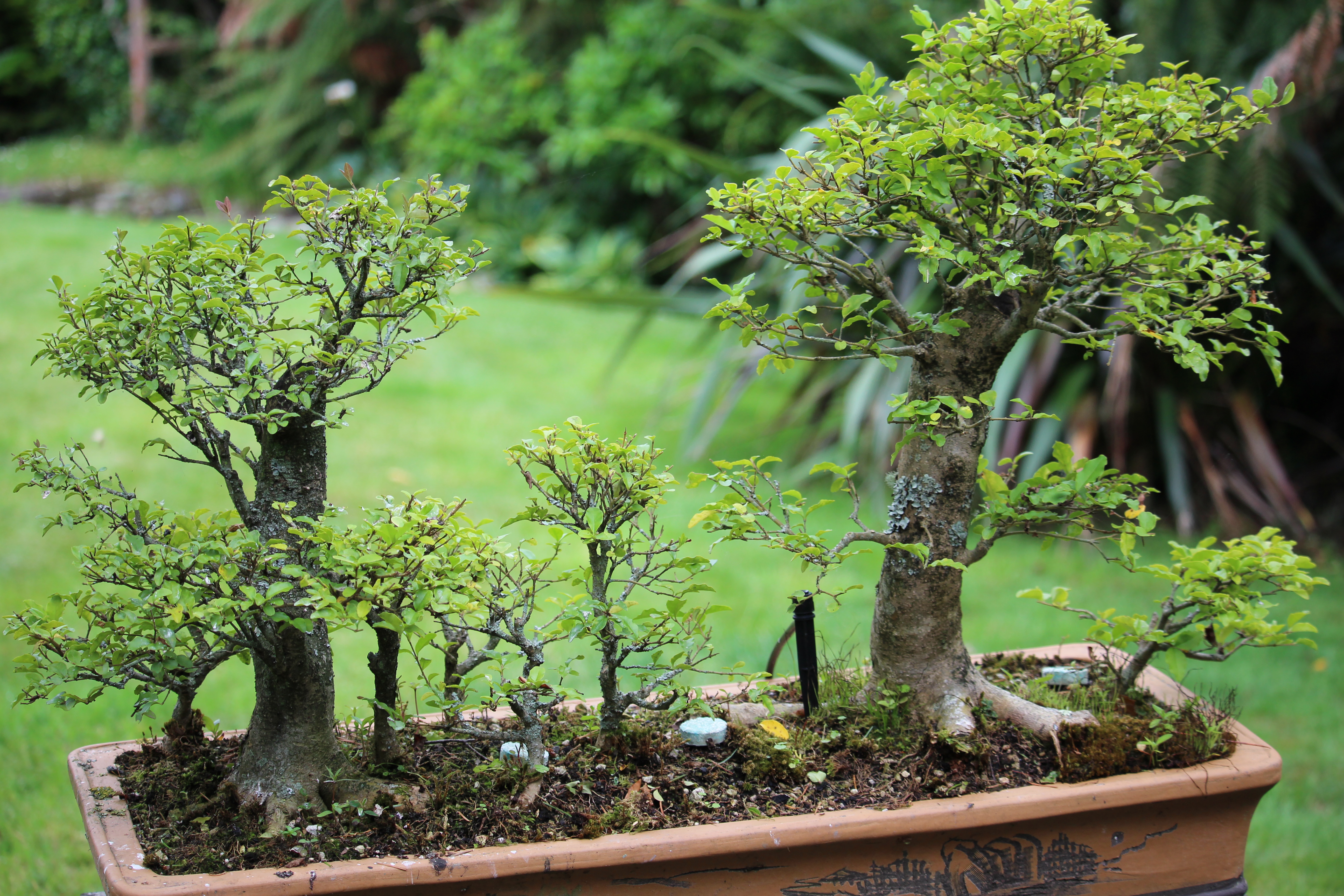
This photo was taken on 5 April 2015. More development is needed on the lower branches on the tree on the left. These trees could be planted as individual trees come Spring with the smaller ones in a shallow pot as a forest. What do you think?

Newby

I have been following quite a lot of Blogs from well known and not so well known people within the Bonsai world. I am at that stage where I think I also have something to contribute. The best way for me is to do it through a Blog. My hope is to add some value to other Bonsai enthusiasts who are on this journey that never ends. I also contribute regularly to Bonsai Times, the New Zealand Bonsai Association’s official publication. My intention is to post those articles here as well.

My quest for knowledge has led me to Blogging. New Zealand has very strict laws in place to prevent the spreading of plant based pathogens. This means that we cannot import Bonsai and everything we have in our collections must come from within. The Bonsai community here is also relatively small and we are reliant on International exposure. This is mainly done through reading whatever we can get our hands on and by attending conventions and displays. The NZBA and host clubs do bring high caliber artists and demonstrators in and the knowledge that they spread is soaked up. The internet is also a huge help with Facebook putting many Bonsai enthusiasts in contact with each other.

My interests are focussed on the Philosophy, Art as well as the practical horticulture that provides the foundation for Bonsai. In exploring all of this, I have also recently started Vlogging. These videos are posted on You Tube and this Blog now gives me the opportunity to post those videos here as well.

So here goes …….